
The Later Vedic Period (1000-600 BCE) saw the Aryan shift to the Gangetic Plain using Iron, establishing territorial states (Janapadas). Society hardened into a rigid Varna System led by Brahmins.
Later Vedic Period
The Later Vedic Period (c. 1000 BCE – 600 BCE)
The Later Vedic Period (c. 1000 – 600 BCE) represents a critical transition from a pastoral-tribal society (Rig Vedic) to a settled, agricultural civilization based in the Ganga plains. This shift was primarily driven by the introduction of iron (Krishna-Ayas) tools, which facilitated large-scale forest clearance and intensive farming. Politically, tribal units (Jana) consolidated into territorial states (Janapada), resulting in a more powerful, hereditary kingship (Rajan). Socially, the flexible class divisions hardened into the rigid, birth-based four-fold Varna System. Religiously, simple worship gave way to complex, expensive rituals, balanced by the emergence of the philosophical Upanishads (Vedanta).
1. Geography of the Later Vedic Phases – Area of Settlement
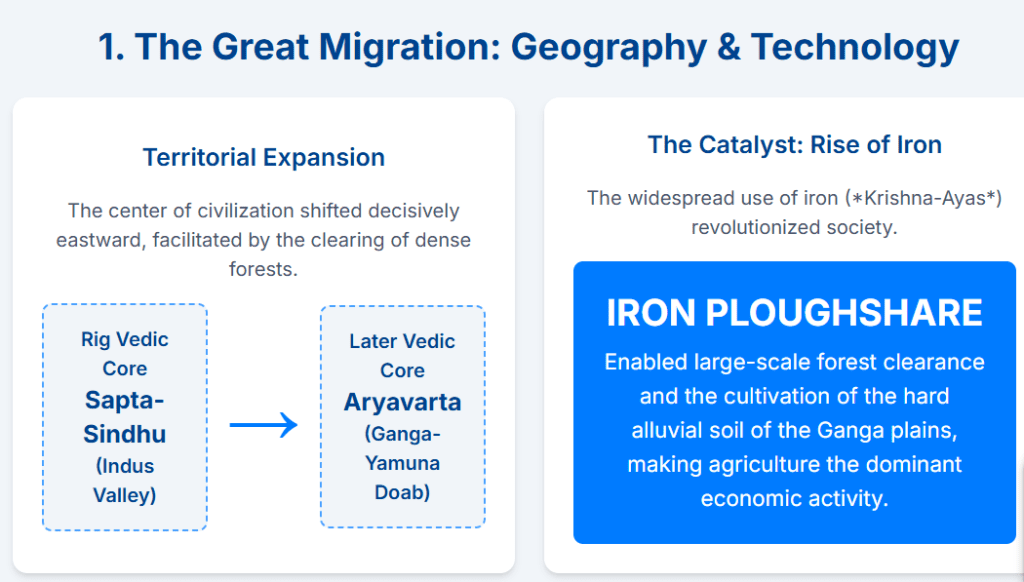
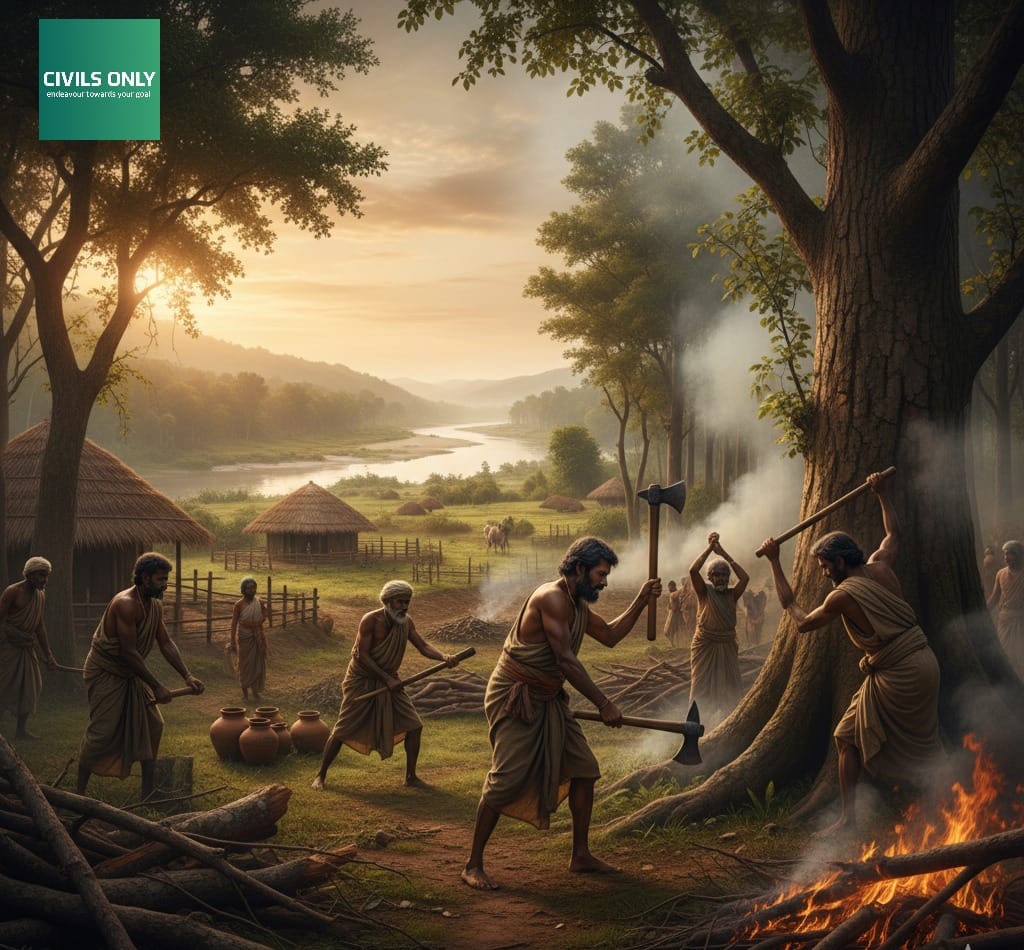
During this phase, the Aryans moved eastward, expanding beyond the geographical confines of the Sapta Sindhu (Indus and its tributaries) region into the fertile Gangetic plain (Ganga-Yamuna Doab). This eastward expansion was facilitated by the use of iron tools, particularly the iron axe (Krishna Ayas or Shyama Ayas), which helped clear the dense forests of the Upper Gangetic basin.
- Core Area: The core of the Later Vedic civilization shifted to Madhyadesa (Central Land), covering modern-day Delhi, Haryana, and the major part of western and central Uttar Pradesh.
- Key Kingdoms (Janapadas): Tribal groups merged to form larger territorial units called Janapadas or Rashtras (territory). The most prominent kingdoms that flourished were the Kurus (formed by the merger of the Bharatas and Purus) and the Panchalas in the upper Ganga-Yamuna Doab. Later, kingdoms like Kosala (Ayodhya), Kasi (Varanasi), and Videha (Mithila) gained prominence in the eastern region.
- Geographical Awareness: The people became familiar with the Arabian Sea and the Indian Ocean, as well as the Vindhya mountain range, marking the beginning of knowledge about the larger Indian subcontinent.
2. Political System
The political structure underwent a significant change, transitioning from the tribal chiefdom of the Early Vedic era to a more established, monarchical, and territorial system.
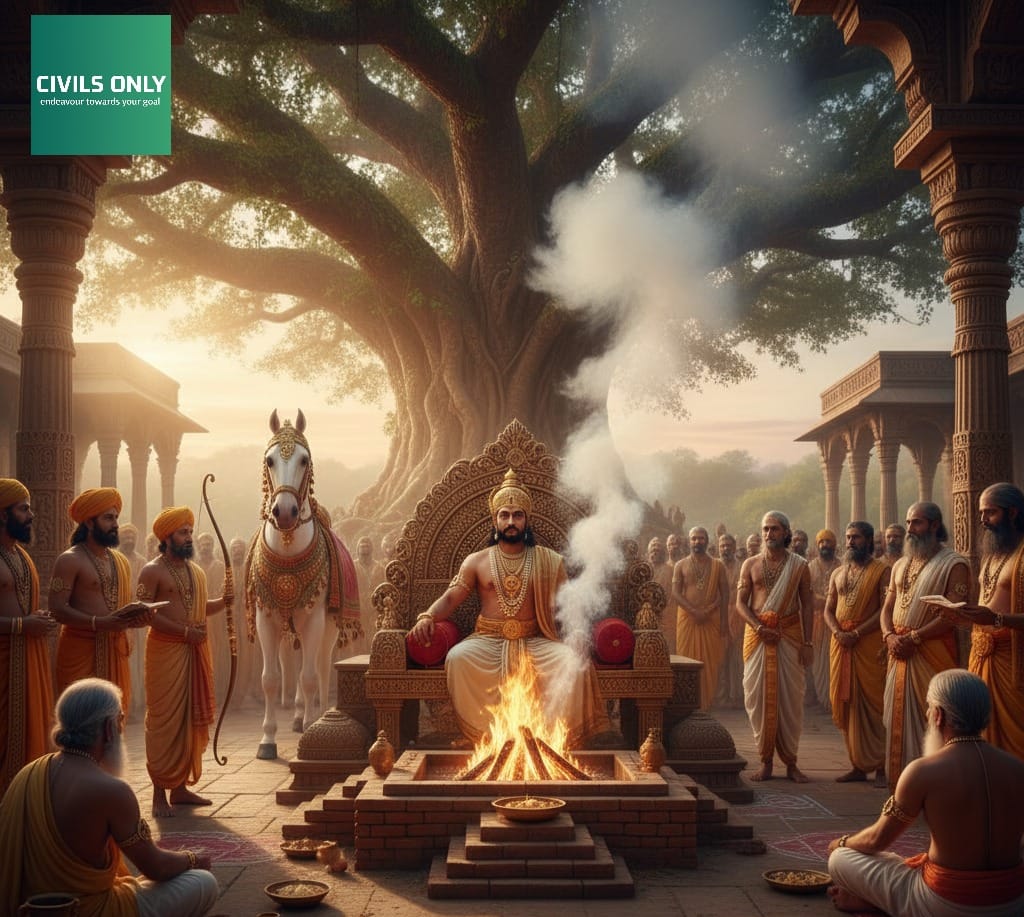
- Rise of the King (Rajan): The tribal chief (Rajan) transformed into a territorial ruler who controlled a fixed area (Rashtra). His position was now largely hereditary and was strengthened by elaborate public sacrifices, such as:
- Rajasuya: Consecration ceremony that bestowed supreme power.
- Ashvamedha: Horse sacrifice to assert undisputed control over the territories where the horse wandered.
- Vajapeya: Chariot race intended to regenerate the king’s power.
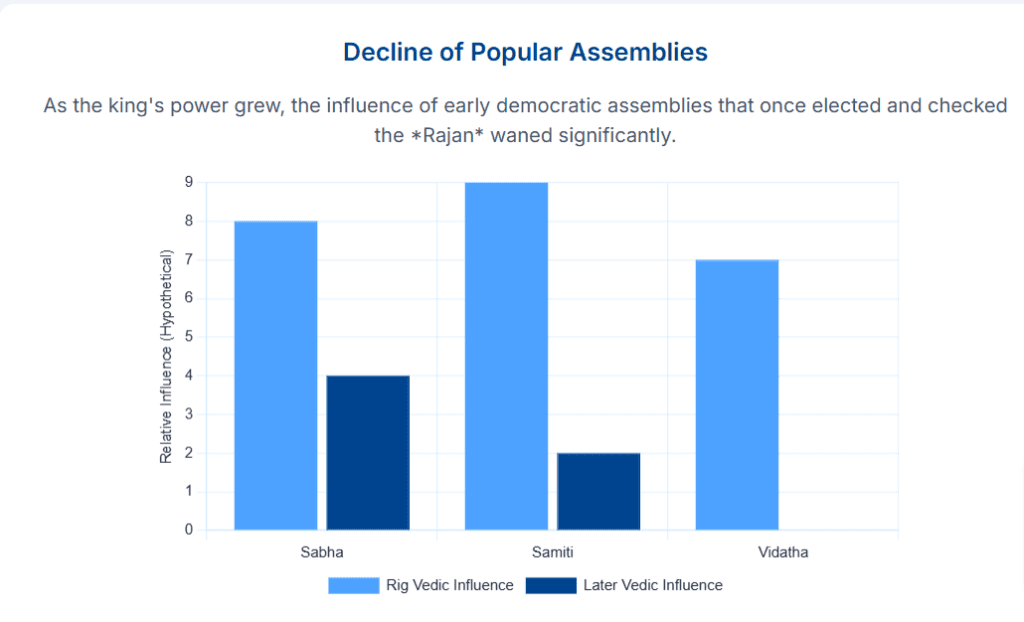
- Decline of Assemblies: The popular tribal assemblies, the Sabha (council of elders) and the Samiti (general assembly), lost much of their power and influence. They became dominated by the nobility and Brahmanas, and women were no longer permitted to participate. The Vidatha, another early assembly, disappeared entirely.
- Administrative Hierarchy: The king was assisted by a sophisticated administrative system with officials known as Ratnins (jewels or functionaries). Key officials included:
- Purohita (Chief Priest): The most important advisor.
- Senani (Commander-in-Chief).
- Sangrihitri (Treasurer/Collector of Taxes).
- Bhagadugha (Tax Collector).
- Taxation: Taxes and tributes, which were voluntary (Bali) in the Rig Vedic age, became compulsory and regular. The Vaishyas were often the primary class responsible for paying these taxes.
Geographical & Political Transformations
| Feature | Early Vedic Period (For Contrast) | Later Vedic Period (Transformation/Value Addition) | Key Facts/Terms |
| Geographical Core | Sapta Sindhu (Indus and its tributaries) | Gangetic Plain (Ganga-Yamuna Doab) | Madhyadesa (Central Land), covering modern Delhi, Haryana, and UP. |
| Expansion Facilitator | Pastoral mobility | Iron Tools (Iron Axe/Plowshare) for forest clearing. | Krishna Ayas or Shyama Ayas (Iron). |
| Political Unit | Jana (Tribe/Chiefdom) | Janapada or Rashtra (Territorial State) | Prominent Janapadas: Kurus, Panchalas, Kosala, Kasi, Videha. |
| King’s Role (Rajan) | Tribal Chief, first among equals. | Territorial Ruler, power largely hereditary. | Compulsory Taxation replaced voluntary tribute (Bali). |
| Royal Sacrifices | Simple rituals | Elaborate Public Sacrifices to assert power. | Rajasuya, Ashvamedha (horse sacrifice), Vajapeya (chariot race). |
| Assemblies | Sabha, Samiti, and Vidatha were powerful. | Decline of Power; became dominated by nobles/Brahmanas. | Vidatha disappeared. Women excluded from Sabha/Samiti. |
| Administration | Rudimentary | Sophisticated Administrative System developed. | Ratnins (King’s functionaries/jewels): Purohita, Senani, Sangrihitri, Bhagadugha. |
3. Social Organisation and Varna System
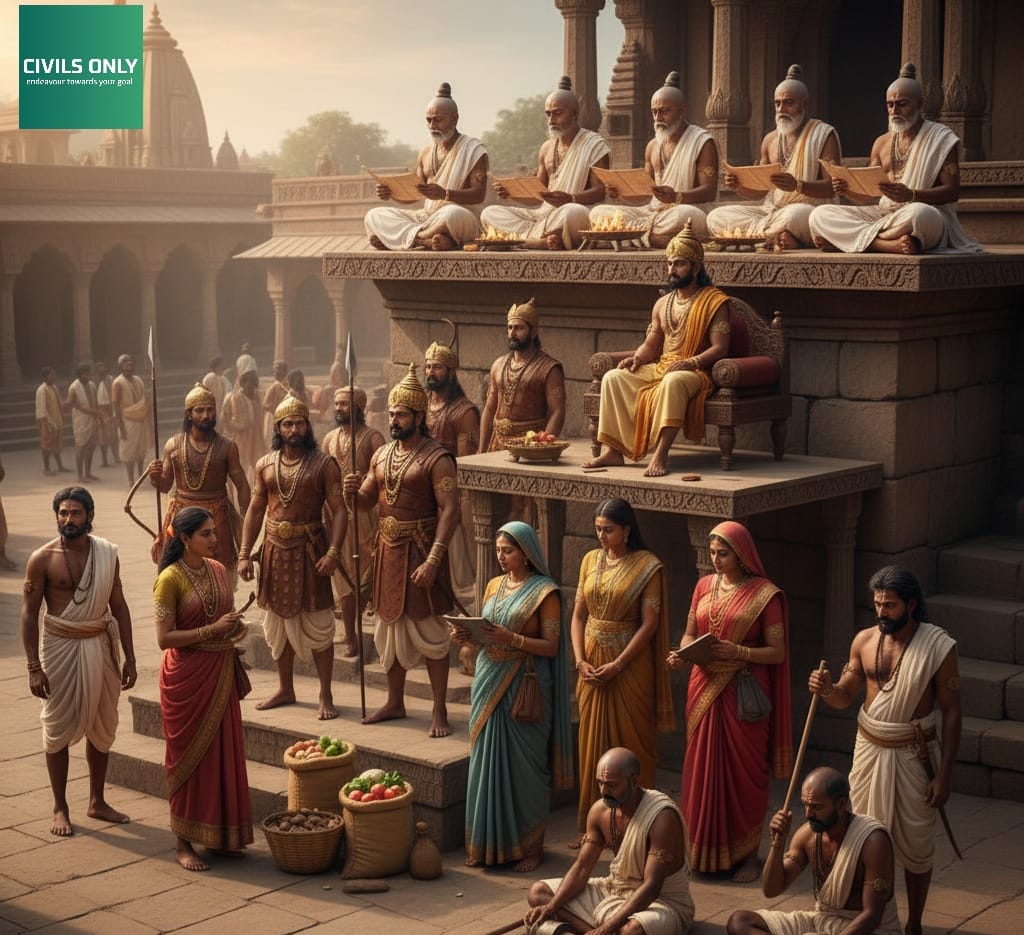
The most profound change in this period was the hardening of the social stratification, with the flexible, occupation-based Varna system evolving into a rigid, hereditary order.
- Rigid Varna Hierarchy: Society was firmly divided into four hierarchical Varnas based on birth, with the first three having the right to the Upanayana (sacred thread ceremony), which marked them as Dvija (twice-born):
- Brahmanas: Priestly class, responsible for performing sacrifices and teaching. Their power increased enormously due to the complexity and necessity of rituals.
- Kshatriyas (Rajanya): Rulers and warriors, responsible for administration and protecting the territory. They often contested the supremacy of the Brahmanas.
- Vaishyas: Common people engaged in agriculture, trade, cattle-rearing, and crafts. They were the main taxpayers, often described in texts as being exploited by the two higher classes.
- Shudras: Servile class, expected to serve the other three Varnas. They were excluded from the Upanayana ceremony and religious rituals, marking the beginning of severe social disabilities.
- Gotra System: The institution of Gotra (meaning ‘cow-pen’ originally) emerged, signifying descent from a common ancestor. Marriage within the same Gotra was strictly prohibited (Gotra Exogamy).
- Status of Women: The status of women declined significantly. They were often considered subordinate to men, were excluded from political assemblies (Sabha), and their participation in public life diminished. Mention of practices like Sati (widow immolation) and child marriages also began to appear in texts.
- Ashrama System: The concept of Ashramas (stages of life) was developing, with three stages mentioned: Brahmachari (student), Grihastha (householder), and Vanaprastha (hermit). The fourth stage, Sanyasa (renunciation), was not yet fully established.
4. Economy
The economic backbone shifted decisively from pastoralism (cattle-rearing) to settled, surplus agriculture, which supported the new, larger settlements and the elaborate rituals of the ruling classes.
- Agriculture: It became the principal occupation. The use of iron implements (though wooden ploughshares were still common) and the knowledge of fertilisation and irrigation led to improved productivity.
- Key Crops: While barley continued to be cultivated, rice (Vrihi) and wheat (Godhuma) became the staple crops, especially in the Ganga-Yamuna Doab.
- Craft Specialisation: Craft specialization intensified, supporting the settled village life. Professions mentioned include smiths, smelters, carpenters, jewelers, dyers, and weavers (weaving being largely confined to women).
- Pottery: Four types of pottery were known, with Painted Grey Ware (PGW) being the most characteristic pottery of this period.
- Trade and Commerce: Trade expanded, likely through specialized caravan traders. The unit of exchange remained barter, but high-value items like Nishka (a gold or silver ornament/bar) and Satamana were used as units of value. The rise of guilds (Ganas) and wealthy merchants (Sreshthins) is also hinted at.
- Beginning of Urbanisation: While the society remained overwhelmingly rural, the existence of larger settlements and the mention of the word Nagara (town/city) in later texts suggest the nascent stage of urbanisation toward the end of the period (c. 600 BCE).
Social & Economic Organization
| Feature | Early Vedic Period (For Contrast) | Later Vedic Period (Transformation/Value Addition) | Key Facts/Terms |
| Varna System | Flexible, based primarily on occupation. | Rigid and Hereditary (based on birth). | The first three Varnas were Dvija (Twice-born) via the Upanayana ceremony. |
| Varna Hierarchy | Brahmanas and Kshatriyas nearly equal. | Brahmanas achieved Supreme Status due to ritual complexity. | Kshatriyas contested Brahmanical supremacy. Vaishyas were the main taxpayers. |
| Shudras | Mentioned occasionally, less defined. | Servile Class, excluded from rituals and Upanayana. | Marked the beginning of severe social disabilities. |
| Kinship | Kula (family) was the primary unit. | Gotra System emerged. | Gotra Exogamy (prohibition of marriage within the same Gotra) was established. |
| Status of Women | Relatively high; participated in assemblies, education (Ghosha, Lopamudra). | Significant Decline; subordinated to men, excluded from political life. | Mention of Sati and child marriage begins. |
| Economic Base | Pastoralism (Cattle-rearing) | Settled Agrarian Economy (Surplus Agriculture). | Key Crops: Rice (Vrihi), Wheat (Godhuma) became staples, alongside barley. |
| Trade/Commerce | Barter system. | Expanded Trade, rise of specialized traders and guilds. | Nishka and Satamana were used as units of value (ornaments/bars). |
| Pottery | Black and Red Ware. | Painted Grey Ware (PGW) is the characteristic pottery. | Increased craft specialisation (smiths, smelters, carpenters). |
5. Religious Practices and Culture
Religious life became increasingly complex, ritualistic, and dominated by the priests, leading to a philosophical counter-movement toward the end of the period.
- Shift in Deities: The prominent Rig Vedic gods like Indra and Agni lost their pre-eminence. New deities rose to prominence:
- Prajapati (The Creator): Became the supreme god.
- Vishnu (The Protector): Gained importance.
- Rudra (The Destroyer/Shiva): Rose in stature.
- Pushan: Earlier a protector of cattle, he became known as the god of the Shudras.
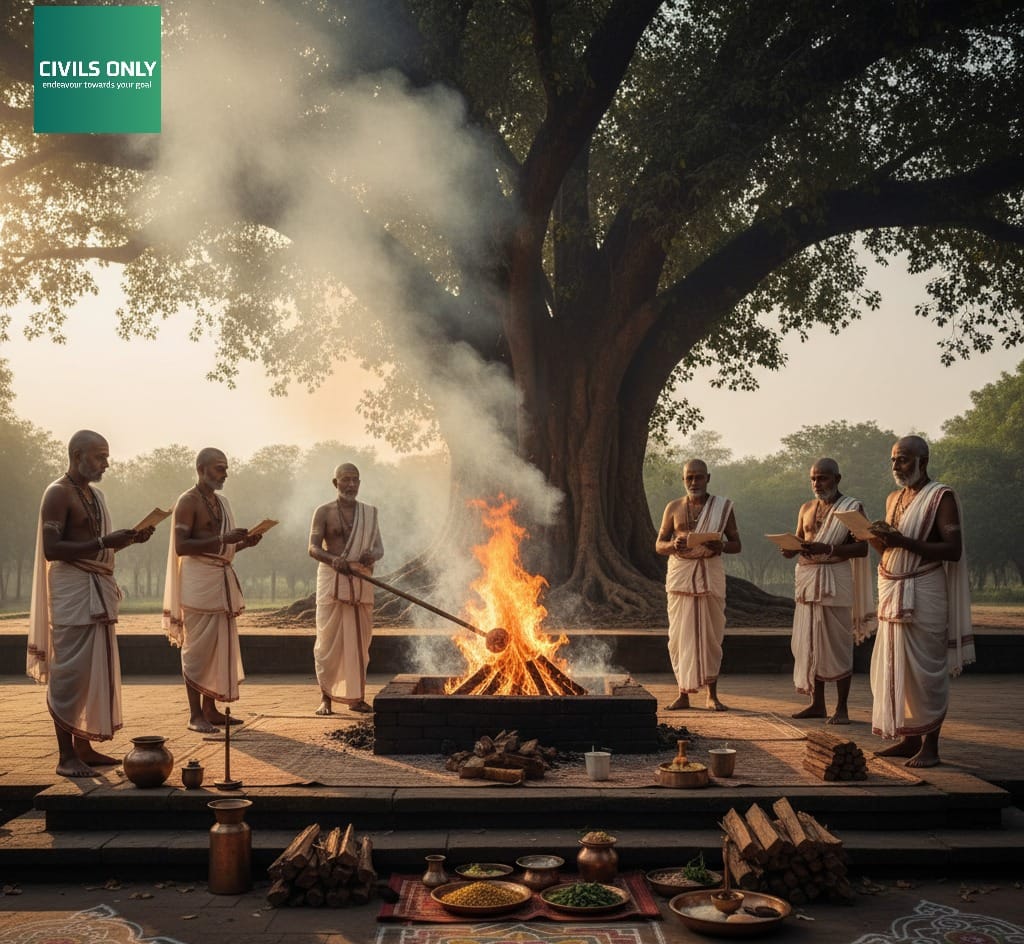
- Dominance of Ritualism (Yajnas): Prayer and simple worship declined, replaced by elaborate, lengthy, and expensive public and domestic sacrifices (Yajnas). The ritual was believed to have an efficacy of its own, capable of forcing the gods to grant wishes. These sacrifices often involved large-scale animal slaughter and required high fees (Dakshina) for the officiating priests.
- Brahmanical Supremacy: The need for complex rituals enhanced the power of the Brahmanas, who became monopolists of religious knowledge and ritual execution. They positioned themselves as intermediaries between men and gods.
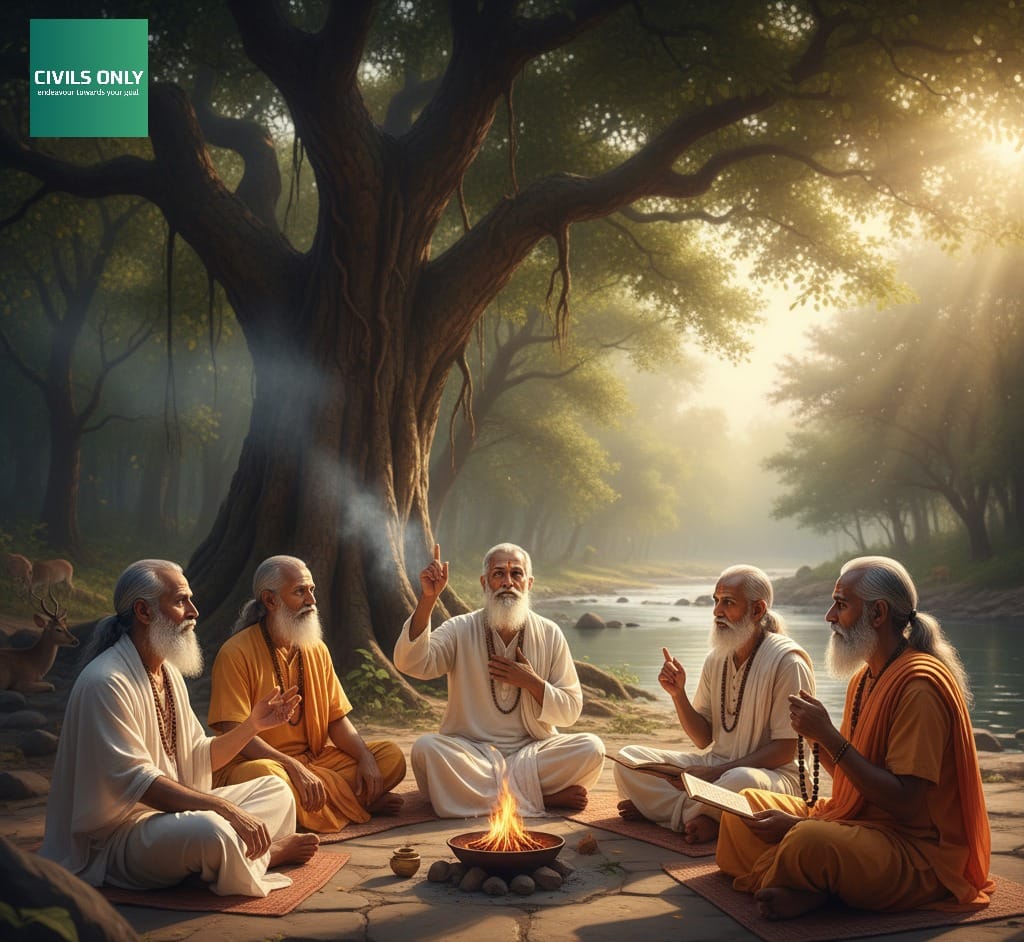
- The Upanishadic Movement: Towards the end of the period (c. 600 BCE), a strong intellectual reaction emerged against the dominance of ritualism and priestly power, primarily in the regions of Kosala and Videha. This philosophical movement led to the compilation of the Upanishads.
- Focus: The Upanishads shifted the religious focus inward, away from external sacrifice, emphasizing knowledge (Jnana), the nature of the soul (Atman), and its union with the Universal Soul (Brahman), and introducing concepts like Karma and Moksha (liberation).
Religious Practices & Cultural Shift
| Feature | Early Vedic Period (For Contrast) | Later Vedic Period (Transformation/Value Addition) | Key Facts/Terms |
| Primary Deities | Indra (War), Agni (Fire), Varuna (Cosmic Order) | Old Gods Lost Pre-eminence, new gods rose. | Prajapati (The Creator) became supreme. Vishnu (Protector) and Rudra (Shiva) gained prominence. |
| Religious Focus | Simple prayers and naturalistic worship. | Dominance of Elaborate Ritualism (Yajnas). | Rituals were believed to have an efficacy of their own. Required high fees (Dakshina) for priests. |
| Priestly Power | Subordinate to the king/tribe. | Brahmanical Supremacy; monopolists of religious knowledge. | Acted as essential intermediaries between man and gods. |
| Philosophical Reaction | Focused on this-worldly gains. | The Upanishadic Movement against ritualism and priestly dominance. | Compiled in the Upanishads (sitting near a teacher). |
| Upanishadic Focus | External Sacrifice | Internal Knowledge (Jnana) and philosophical concepts. | Key concepts: Atman (Individual Soul), Brahman (Universal Soul), Karma, and Moksha (Liberation). |
Vocabulary List
- Aryavarta: The core region of Later Vedic settlement, primarily the Ganga-Yamuna Doab.
- Krishna-Ayas: The Later Vedic term for Iron (literally ‘black metal’).
- Janapada: A territorial state or kingdom that replaced the tribal unit (Jana).
- Ashvamedha: A complex royal ritual, the Horse Sacrifice, performed to assert military and territorial sovereignty.
- Rajasuya: The royal consecration ceremony that gave the king supreme status.
- Ratnins: High-ranking administrative officials assisting the king, literally ‘Jewels’.
- Varna System: The rigid, hierarchical social system dividing society into four classes based on birth.
- Vaishya: The third Varna, the class of producers, traders, and the primary taxpayers.
- Rudra: The deity who gained importance in this period as the precursor to the god Shiva.
- Upanishads (Vedanta): Philosophical texts dealing with the nature of reality, soul, and liberation.
- Atman and Brahman: Core Upanishadic concepts of the individual soul and the universal soul/ultimate reality, respectively.