
Explore Pre-Historic Times in India: the Palaeolithic (rough tools), Mesolithic (microliths), and Neolithic (first agriculture). Learn about the transition to the Chalcolithic (Copper) and Early Iron Age, studying the sources, culture, tools, and key geographical distribution sites.
Pre-Historic Times in India
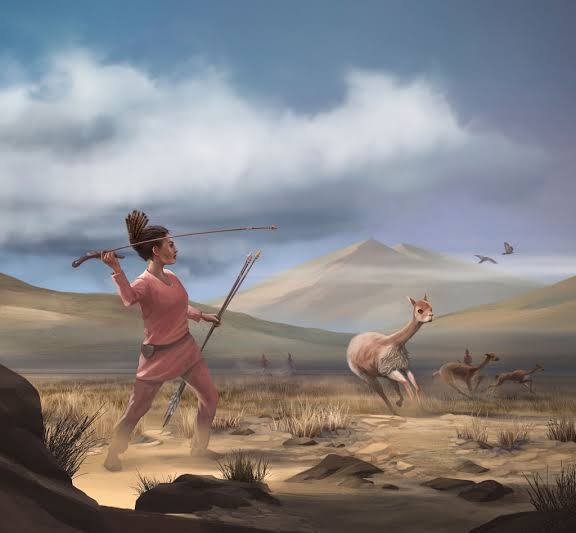
Pre-Historic Period (or Prehistory) refers to the vast span of time before the invention of writing systems. Since written records are absent, our understanding of this era relies heavily on archaeological excavations of tools, pottery, skeletal remains, and environmental evidence. The Pre-historic Times in India are broadly classified based on the types of tools used, predominantly the Stone Age, followed by the emergence of metals.
Periodisation of Indian Pre-History
The Indian Pre-History is systematically divided into different ages, reflecting advancements in technology, economic life, and cultural practices.
| Phase | Time Period (Approximate) | Dominant Tool Material/Defining Feature | Key Lifestyle |
| Palaeolithic Age | 500,000 BCE – 10,000 BCE | Rough, unpolished stone tools (quartzite), Flakes | Nomadic Hunter-Gatherers |
| Mesolithic Age | 10,000 BCE – 6,000 BCE | Microliths (very small stone tools) | Transitional Hunters/Gatherers, beginning of Animal Domestication |
| Neolithic Age | 6,000 BCE – 1,000 BCE | Polished and ground stone tools (Celts) | Beginning of Agriculture, Settled Village Life, Pottery |
| Chalcolithic Age | 3,000 BCE – 700 BCE | Copper and low-grade Bronze, Stone tools | First use of metal (Copper), Agro-pastoral communities |
| Early Iron Age | 1,500 BCE – 600 BCE | Iron tools | Widespread use of Iron, beginning of Mahajanapadas |
Sources of Pre-History
As there are no written accounts (literary sources) for Pre-History, historians and archaeologists depend entirely on archaeological sources:
- Stone Tools and Artefacts: The most vital source, as their type, technique, and raw material help in classifying the different periods (e.g., hand-axes, microliths, polished axes).
- Pottery: Styles, material, and decoration (e.g., Black-and-Red Ware, Ochre Coloured Pottery) provide insights into culture and trade.
- Faunal and Floral Remains: Animal bones (paleozoology) and plant remains (paleobotany), like charred grains, help determine diet, domestication, and agricultural practices.
- Skeletal Remains: Human and animal remains offer evidence of physical anthropology, burial practices, and health.
- Rock Art and Cave Paintings: Depicting hunting scenes, daily life, and rituals (e.g., Bhimbetka rock shelters).
- Dating Techniques: Radiocarbon dating ($C^{14}$) and other scientific methods provide accurate chronological timelines.
Palaeolithic Or Old Stone Age (500,000 BCE – 10,000 BCE)
The longest period of the Stone Age, often coinciding with the Pleistocene geological epoch and the Ice Age.
Characteristics:
- Lifestyle: People were nomadic hunter-gatherers, dependent on wild fruits, vegetables, and hunting animals. They lived in open air, rock shelters, and caves (e.g., Bhimbetka).
- Tools: The tools were crude, large, and made of quartzite (hence, early humans were called ‘Quartzite Men’).
- Key Tool Types:
- Lower Palaeolithic: Hand-axes, Cleavers, and Choppers. (Acheulian and Soanian traditions).
- Middle Palaeolithic: Tools made predominantly on flakes (smaller, sharper tools like scrapers, borers, and points).
- Upper Palaeolithic: Marked by the emergence of Homo sapiens and tools made on blades and burins, along with bone tools. Evidence of cave painting begins.
Geographical Distribution:
Found across India, except the alluvial plains of the Ganga and Indus. Important sites include the Soan Valley (Pakistan), Belan Valley (UP), Bhimbetka (MP), and Bori (Maharashtra – one of the earliest sites).
Mesolithic Or Middle Stone Age (10,000 BCE – 6,000 BCE)
A transitional phase between the Palaeolithic and Neolithic, associated with the beginning of the Holocene epoch (warming climate).
Characteristics:
- Lifestyle: Still primarily hunter-gatherers but began moving towards a semi-settled life.
- Animal Domestication: Early evidence of animal domestication (dog, sheep, goat) is found.
- Tools: Distinctive use of Microliths—tiny, geometrically shaped stone tools (1-5 cm long), often hafted onto wood or bone to create composite tools like spears and arrows.
- Art: Rich evidence of rock paintings depicting daily activities, animals, and warfare.
- Burial: Intentional burial of the dead found (e.g., Sarai Nahar Rai).
Geographical Distribution:
Found in river valleys, rock shelters, and open sites. Key sites: Bagor (Rajasthan – largest site), Adamgarh (MP), Langhnaj (Gujarat), and sites in the Belan Valley (UP).
Neolithic Age Or New Stone Age (6,000 BCE – 1,000 BCE)
Termed the Neolithic Revolution by Gordon Childe, as it fundamentally changed human life from a food-gathering to a food-producing stage.
Characteristics:
- Lifestyle: Shift to a settled village life with the emergence of agriculture and animal husbandry.
- Agriculture: Cultivation of crops like wheat, barley, rice, and millets.
- Tools: Use of polished and ground stone tools (especially the Celt or ground axe) for better cutting and farming, along with bone tools.
- Pottery: Invention of pottery (both handmade and later wheel-made) for cooking and storage.
- Housing: Lived in rectangular or circular houses made of mud and reed. Pit-dwellings found in Kashmir.
Geographical Distribution:
- North-West: Mehrgarh (Balochistan – earliest evidence of agriculture in the subcontinent, c. 7000 BCE), Burzahom and Gufkral (Kashmir – known for pit-dwellings and use of bone tools).
- North-East: Sites in Assam.
- South: Sites like Maski, Brahmagiri (Karnataka), and Utnur (Andhra Pradesh).
- Eastern: Chirand (Bihar – noted for bone tools).
Chalcolithic Age (3,000 BCE – 700 BCE)
The Copper-Stone Age marks the end of the Stone Age and the first use of metal, though stone tools continued to be used.
Characteristics:
- Technology: Use of Copper (and low-grade Bronze) along with stone. This is often considered the First Metal Age of India.
- Lifestyle: Primarily rural and agro-pastoral communities. They cultivated crops (wheat, rice, barley, cotton) and reared cattle, sheep, and goats.
- Pottery: Distinctive pottery, most notably Black-and-Red Ware (BRW) and Ochre-Coloured Pottery (OCP). Wheel-made pottery was common.
- Settlements: Houses were usually rectangular or circular mud huts.
Major Chalcolithic Cultures
Chalcolithic cultures showed strong regional variations across India:
| Culture | Region | Key Sites | Distinctive Feature |
| Ahar-Banas Culture | South-Eastern Rajasthan | Ahar, Gilund | Extensively used Copper. Stone structures at Gilund. |
| Malwa Culture | Western MP | Navdatoli, Eran | One of the largest Chalcolithic settlements. Rich, distinct pottery. |
| Jorwe Culture | Maharashtra | Jorwe, Inamgaon, Daimabad | Practiced urn-burial of dead, distinctive painted pottery. |
| Eastern India | Bihar, Bengal | Chirand, Mahishadal | Rice as a major crop. |
Early Iron Age (1,500 BCE – 600 BCE)
The phase following the mature Harappan and Late Harappan periods, characterised by the emergence of Iron use and the rise of Vedic cultures in parts of India.
Characteristics:
- Technology: Transition from Copper/Bronze to Iron as the primary metal for tools and weapons.
- Culture: Often associated with the Painted Grey Ware (PGW) culture in the upper Gangetic Valley, which eventually led to the Second Urbanisation (the rise of Mahajanapadas).
- Agriculture: Iron tools facilitated the clearing of dense forests in the Ganga valley, leading to large-scale agriculture.
- Settlements: Shift towards larger, more complex settlements, paving the way for the formation of kingdoms.
Geographical Distribution and Characteristics
| Age | Economic Activities | Social Structure/Lifestyle | Tools & Technology | Major Sites/Regions |
| Palaeolithic | Hunting and Gathering | Nomadic, lived in caves/rock shelters, no settled life | Rough Quartzite Hand-axes, Cleavers, Flakes, Blades | Bhimbetka, Soan Valley, Belan Valley |
| Mesolithic | Hunting, Fishing, Food Gathering, beginning of animal domestication | Semi-nomadic, temporary camps, belief in afterlife (burials) | Microliths (small, sharp stone tools), Bone and Antler tools | Bagor, Adamgarh, Langhnaj |
| Neolithic | Agriculture (food-producing), Animal Husbandry | Settled Village Life, Pottery, Pit-dwellings/Mud houses | Polished Stone Tools (Celts), Bone tools | Mehrgarh, Burzahom, Chirand, Utnur |
| Chalcolithic | Agriculture, Cattle rearing | Rural communities, first use of Metal (Copper) | Stone tools and Copper implements, Black-and-Red Ware Pottery | Ahar, Malwa, Jorwe, Navdatoli |
| Early Iron | Advanced Agriculture | Beginning of large, territorial units (Janapadas) | Iron tools and weapons, Painted Grey Ware (PGW) | Upper Gangetic Valley (e.g., Hastinapura, Atranjikhera) |