
Discover the history of the powerful Pandya Dynasty, the Muvendars who ruled from Madurai. Explore their origins, the Golden Age of Imperial Pandyas, their control of the global pearl trade, sophisticated administration, and their lasting legacy in Dravidian architecture (Gopurams) and Tamil literature.
Pandya Dynasty(c. 3rd Century BCE – 15th Century CE)
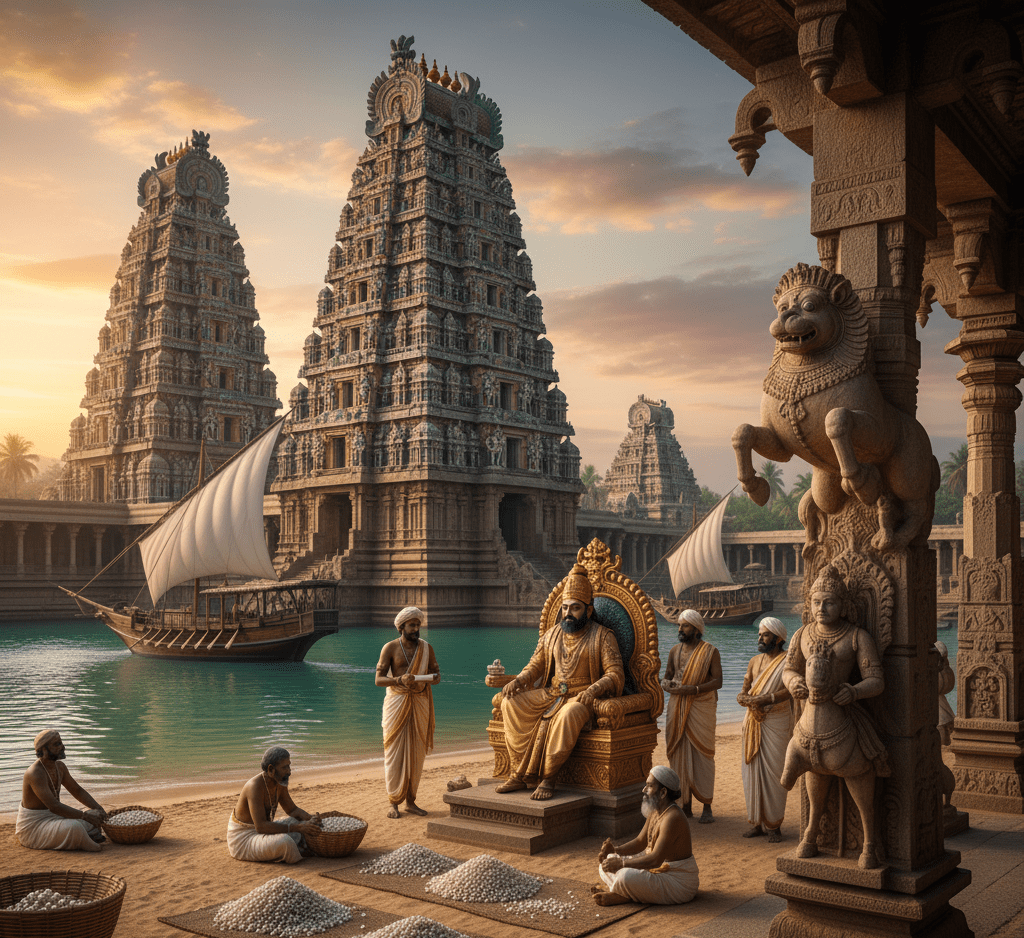
Pandya Dynasty was one of the three great crowned kings (Muvendars) of the ancient Tamil country, ruling primarily from their core territory around Madurai in South India. Along with the Cholas and Cheras, the Pandyas constitute a foundational pillar of Tamil history, with a continuous, albeit fragmented, presence from the Sangam Age (c. 3rd century BCE) until the 15th century CE. Renowned for their strategic control over the lucrative pearl fisheries of the Gulf of Mannar, their immense wealth fuelled an empire that was globally recognized as a major trading power. The dynasty is also celebrated for its profound patronage of the Tamil language (traditionally associated with the legendary Sangams or academies) and its lasting contributions to the Dravidian architectural style, particularly the development of the monumental Gopuram (temple gateway tower).
Origins and Phases of Expansion
The history of the Pandyas is generally divided into three major phases, marked by periods of great expansion and temporary decline.
I. The Early Pandyas (Sangam Age)
- Time Period: c. 3rd century BCE – 3rd century CE.
- Capital: Initially Korkai (renowned for its pearl fisheries), later shifted to Madurai.
- Significance: This era is documented extensively in the Sangam literature (e.g., Maduraikkanchi) and by foreign accounts. Greek and Roman writers, including Pliny the Elder and the author of the Periplus of the Erythraean Sea, mention the Pandya pearl trade.
- Key Ruler: Nedunjeliyan, the victor of the Battle of Talaiyalanganam.
II. The First Pandya Empire
- Time Period: c. 6th century CE – 10th century CE.
- Resurgence: The dynasty was revived by Kadungon after overthrowing the Kalabhra interregnum.
- Conflicts: Engaged in constant warfare with the rising Pallavas of Kanchi and the Cholas.
- Notable Ruler: Maravarman Rajasimha I and Jatila Parantaka Nedunjadaiyan.
III. The Later (Imperial) Pandyas
- Time Period: c. 13th century CE – 14th century CE.
- Apex of Power: Considered the Golden Age of the Pandyas. They rose to supremacy following the decline of the Chola Empire.
- Greatest Rulers:
- Maravarman Sundara Pandyan I (1216–1238 CE): Defeated the Cholas, marking the final shift in power dominance.
- Jatavarman Sundara Pandyan I (1251–1268 CE): Expanded the empire vastly, extending influence up to the Telugu country and conquering Sri Lanka. He distributed immense wealth among temples and charities.
- Decline: Following internal succession disputes and the devastating invasion by Malik Kafur (Delhi Sultanate general) in 1311 CE, the empire fragmented, leading eventually to the establishment of the Madurai Sultanate.
| Era | Core Period | Capital City | Defining Characteristic |
| Early Pandyas | c. 300 BCE – 300 CE | Madurai, Korkai | Pearl trade, Sangam literature patronage. |
| First Empire | c. 600 CE – 1000 CE | Madurai | Conflict with Pallavas, early rock-cut temple architecture. |
| Imperial Pandyas | c. 1200 CE – 1350 CE | Madurai | Supreme power in South India, massive temple expansion, wealth. |
Military and Maritime Strength
The Pandyas maintained a formidable military and were masters of the sea, securing their trade routes and territorial integrity.
Military Composition
- Infantry: The core of the army, utilizing spears, swords, and bows.
- Cavalry: The Pandyas relied heavily on imported horses from Arabia and Persia, giving them a significant edge. This trade was extremely lucrative and strategically vital.
- Elephant Corps: Used extensively in battle and for ceremonial purposes.
Naval Power and Trade Control
- Ports: Key ports like Korkai and Kayalpattinam (a major international trading hub in the Imperial period) were under their control.
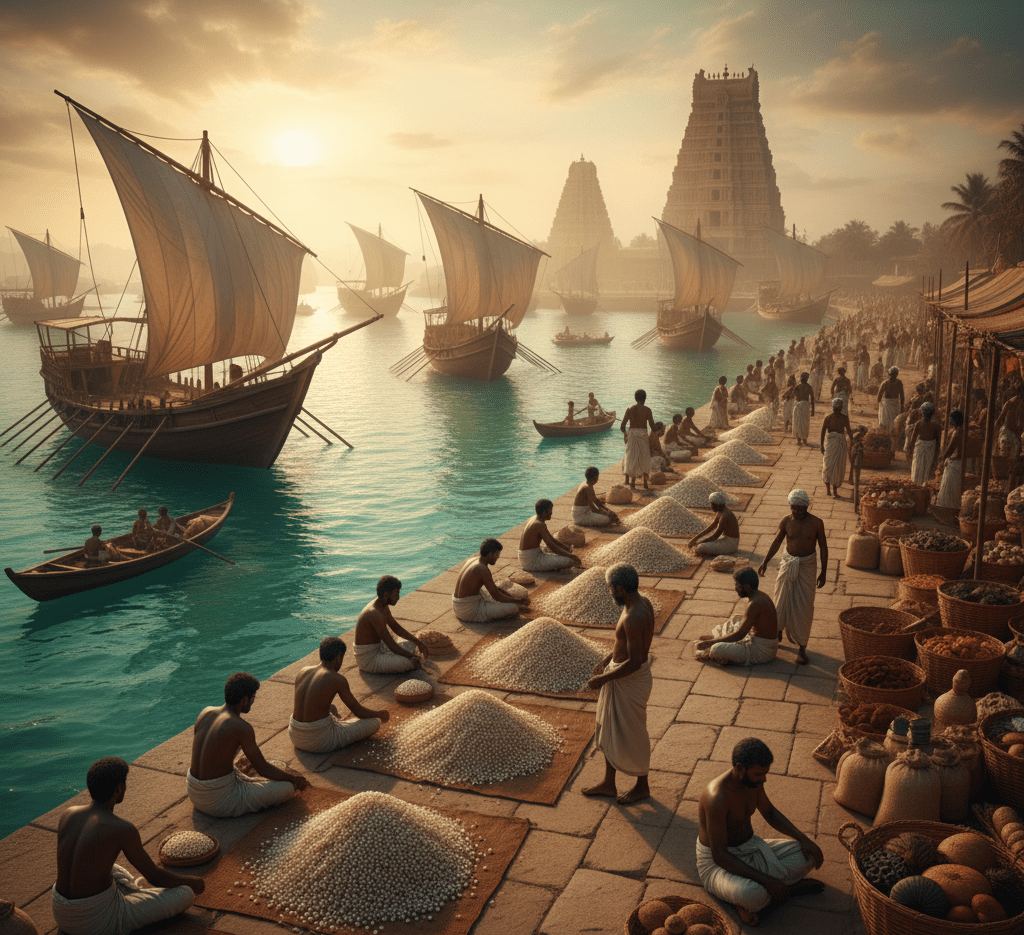
- Pearl Fisheries: The Pandyas held a near-monopoly over the lucrative pearl fisheries in the Gulf of Mannar, which was a primary source of their immense wealth.
- Naval Presence: They used their navy to launch military campaigns against Sri Lanka and to protect their vast maritime trade network from pirates.
Economy, Trade, and Coinage
The Pandya economy was one of the most prosperous in the world during their peak, built upon robust agriculture and unparalleled international commerce.
Pillars of the Economy
- Agriculture: Based on the fertile plains irrigated by rivers like the Vaigai and Tamiraparani. They maintained and constructed numerous irrigation tanks (eri).
- Revenue: Land revenue (Kadamai) was the chief source of income, supplemented by taxes on trade, professions, and salt.
- International Trade: The Pandyas were central to the trade between the West and Southeast Asia. The Venetian traveller Marco Polo (1288 CE) described the Pandyan kingdom as “the richest and most splendid province in the world.”
| Key Exports | Key Imports | Major Trading Partners |
| Pearls (The Primary Commodity) | War Horses (from Arabia/Persia) | Arab Lands (Primary partner) |
| Spices (Pepper, Ginger, Cardamom) | Gold, Silver (Bullion) | China and Southeast Asia |
| Fine Cotton and Silk Textiles | Precious Stones (gems) | Roman Empire (in the early period) |
Coinage
The most distinct emblem of the Pandyas was the Fish (Meenam), often appearing singly or in pairs on their coins. They issued coins in Gold, Silver, and Copper. Some gold coins bore inscriptions of ‘Sundara’ or ‘Kulashekara’.
Administration and Governance
The Pandya administrative system was hierarchical, balancing central royal authority with efficient local self-governance.
Central Administration
- King (Ko): The absolute head, who took titles like Kōn, Vēndan, and Chōlan (when conquering the Cholas).
- Council of Ministers: The King was assisted by a council of five members, known as the Panchamahapatakas.
- Royal Secretariat: The Tirumantira Olai was the royal scribe responsible for recording royal decrees.
Administrative Divisions and Local Governance
The entire kingdom (Pandya Mandalam) was divided into various units:
| Administrative Unit | Head/Official | Function and Significance |
| Mandalam | King/Viceroy | The entire kingdom. |
| Valanadu | Governor/Prince | Major province or territorial division. |
| Nadu/Kurram | Nattars (local chiefs) | District/Group of villages. |
| Ur/Gramam | Village Assemblies | The fundamental unit of administration, managing irrigation, justice, and tax collection. |
Judicial System
The King’s court (Dharmasana) was the highest judicial body. Local justice was administered through village assemblies and specialized committees known as Nyayattars.
Cultural, Literary, and Architectural Legacy
The Pandyas were pivotal patrons of the Bhakti movement, Tamil literature, and the unique development of the Dravidian temple style.
Religion and Patronage
- Jainism and Hinduism: While initially showing affinity for Jainism (as seen in the Sittanavasal Cave paintings), the later Pandyas were strong proponents of the Bhakti movement, patronizing both the Shaivite Nayanars and Vaishnavite Alvars.
- Rituals: Imperial rulers performed elaborate rituals like Hiranyagarbha (entering a gold cow image) and Tulabhara (weighing oneself against gold and distributing it) to proclaim their status as benevolent, universal rulers.
Literature and Education
- The Sangam Age: The Pandyas are eternally linked to the legendary Tamil Sangams (Academies of poets) in Madurai, which are believed to have codified the rules of Tamil poetry.
- Later Literature: The Imperial period saw the composition of important commentaries, devotional literature (Hymns of Nayanars and Alvars), and historical epics.
Architecture: The Pinnacle of Dravidian Style
The Pandya period marked a transition in the Dravidian temple architecture, focusing on the external grandeur rather than just the central shrine.
| Architectural Element | Pandya Style Distinctives | Example/Significance |
| Gopurams (Gateway Towers) | Massive and Tallest Feature. Served as monumental entrance towers, richly decorated with plaster sculptures (stucco). | The numerous Gopurams of the Meenakshi Amman Temple, Madurai. |
| Mandapas (Pillared Halls) | Large, expansive, and ornate halls, often featuring the ‘Thousand Pillar Hall’ concept. | Pudhu Mandapam in Madurai; pillars feature monolithic carvings of yalis (mythological beasts) and mounted warriors. |
| Rock-cut Caves | Simple monolithic shrines carved into rock faces, often containing early frescoes. | Sittanavasal Cave Temple (famous for the ‘Lotus Tank’ fresco). |
| Vimana (Main Shrine) | Tended to be smaller in scale and less decorated than the gopurams during the later Imperial period. | Illustrates the architectural shift of focus to the temple complex as a whole. |
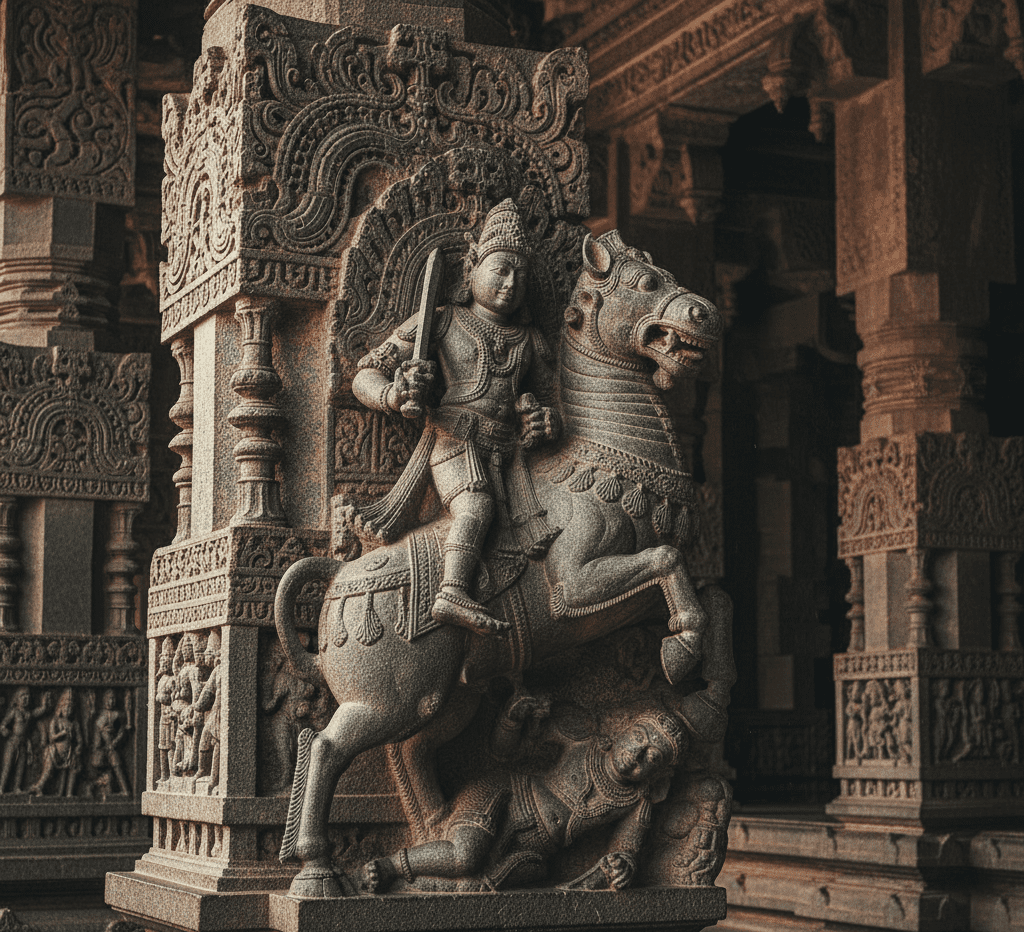
The legacy of the Pandyas—from their control of the world’s pearl trade to their stunning architectural contributions in Madurai—stands as a monumental testament to the endurance and cultural richness of the Tamil civilization.