
Creation of Theatre Command
Context: CDS General Anil Chauhan outlines in his new book how Integrated Theatre Commands (ITCs) will be central to India’s next phase of military reforms.
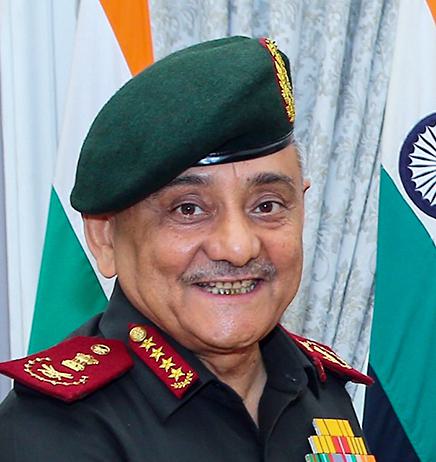
Key Highlights from the Book – ‘Ready, Relevant and Resurgent: A Blueprint for the Transformation of India’s Military’
- Dual Structure of Responsibilities
- Theatre Commanders: Will handle Force Application (operational duties).
- Service Chiefs (Army, Navy, Air Force): Will focus on Raise, Train, Sustain (RTS) — i.e., Force Generation.
- Goal of Theatre Commands
- To create parallel and complementary stream
- Force-Application
- Force Generation
- Meant for optimal resource utilisation and operational integration.
- Significance of Reforms
- Described as “one of the most revolutionary changes post-Independence” in India’s military structure.
- Aims to establish joint operational structures at multiple levels.
- Role of the CDS
- To facilitate the restructuring of commands.
- Ensure jointness between Army, Navy, and Air Force.
- Reorganise the armed forces into geography-centric Integrated Theatre Commands (ITCs).
Key Requirements for Theatre Commands
- High Degree of Jointness
- Essential among the three services.
- Includes physical integration of systems, infrastructure, and activities.
- Organisational & Cultural Transformation
- Apex-level reforms will bring conceptual and cultural changes.
- Expected to cascade down to lower headquarters and field formations.
- Awareness & Acceptability
- Officers at all levels must be informed and prepared for the upcoming changes.
- Acceptability will be key to a smooth transition.
Legality of dual taxation on broadcasting services by the Centre and the States
Context: The Supreme Court has ruled that both the Centre and States can levy separate taxes on different aspects of broadcasting services.
Key Points from the Supreme Court Judgment
- Dual Taxation Permissible
- The Centre can levy service tax on broadcasting services under the Finance Act, 1994.
- State governments can levy entertainment tax on the consumption of broadcasting content (TV, cable, etc.).
- No Overlapping of Taxes
- The Court clarified that these taxes cover distinct aspects of the same activity:
- Broadcasting as a service → Taxed by CentreEntertainment provided to viewers → Taxed by State
- Both taxes are under separate constitutional powers.
- Constitutional Entries Invoked
- Entry 97 – Union List: Parliament has the power to impose service tax.
- Entry 62 – State List: States have the power to impose an entertainment tax.
- Interpretation by the Court
- Activity of broadcasting = a service
- Entertainment received through broadcasting = a luxury/entertainment, taxable by the State.
- Judgement delivered by Justice B.V. Nagarathna, supported by Justice N. Kotiswar Singh.
Broad Meaning of “Entertainment”
- The court held that the term “entertainment” must be interpreted broadly and liberally.
- With technological advances, entertainment now includes:
- TV and cable
- Mobile phones
- Smartwatches
- Personal devices at home
The expression “entertainment” is no longer limited to public spaces, but includes private consumption too.
Significance of the Verdict:
- Confirms legislative competence of both the Centre and State in taxing distinct aspects of the same activity.
- Strengthens fiscal federalism and sets a precedent for interpreting overlapping economic activities.
- Reiterates constitutional clarity in taxation matters under the Seventh Schedule.
Bridging the Medical oxygen access gap in Southeast Asia
Importance of Medical Oxygen
- Medical oxygen is life-saving and has no substitute.
- Over 5 billion people globally lack access to safe, quality, affordable oxygen.
Global & Regional Gaps:
- South Asia & East Asia-Pacific: Highest unfulfilled demand.
- Coverage gap: South Asia – 78%, East Asia-Pacific – 74%.
- COVID-19 exposed the oxygen infrastructure crisis in LMICs (Low- and Middle-Income Countries).
Systemic Barriers:
- Equipment Shortage:
- Only 54% of LMIC hospitals have pulse oximeters.
- Only 58% have consistent access to medical oxygen.
- Funding Gap:
- Global need: $6.8 billion; South Asia alone: $2.6 billion.
- Ad-hoc emergency responses won’t ensure long-term solutions.
- Skilled Workforce Shortage:
- Lack of biomedical engineers/technicians hampers maintenance and repair of oxygen plants.
Strategic Recommendations
- Develop national scale-up plans with WHO support.
- Use WHO’s Oxygen Scorecard to track progress and report to WHA in 2026, 2028, and 2030.
- Foster intra-regional cooperation (e.g., Nepal-Bhutan PSA plant collaboration).
- Encourage solar-powered oxygen plants in energy-poor areas (success stories: Ethiopia, Nigeria).
Role of Stakeholders
- Governments: Must lead by integrating oxygen access in health policy and emergency plans.
- Private Sector: Invest in local production and distribution.
- Global Agencies: Maintain oxygen as a top funding priority.
- Academia/Research: Innovate low-cost, adaptable solutions for LMICs.
- Tech: Use digital tools for supply chain & real-time demand management.
Conclusion
- Medical oxygen access = Health + Human Rights + Equity.
- From crisis-driven to sustainable infrastructure: Long-term political will and investment are vital.
- Oxygen should be a right, not a privilege.
RBI transfer money to the Govt. via dividend
Context:
- RBI to transfer ₹2.69 lakh crore (₹2,68,590.07 crore) as dividend to the Union Government for FY 2024-25.
- This is 27% higher than the ₹2.10 lakh crore transferred in FY 2023-24.
Economic Capital Framework (ECF) & Risk Buffer
- Based on the revised ECF (approved on May 15, 2025).
- RBI raised the Contingent Risk Buffer (CRB) to 7.5% of its balance sheet.
- Previous CRB levels:
- 2018-2022: 5.5% (due to COVID-19 impact)
- 2022-23: 6%
- 2023-24: 6.5%
Fiscal & Market Implications
- The Union Budget 2025-26 had estimated ₹2.56 lakh crore dividend from RBI + PSUs.
- Actual transfer from the RBI alone exceeds this estimate.
- Fiscal deficit may reduce by 20 bps, from budgeted 4.4% to ~4.2% of GDP.
- Reasons for high surplus:
- Robust gross dollar sales.
- Higher forex gains.
- Rise in interest income.
- RBI was the top forex seller among Asian central banks in January 2025.
Market Reaction
- Some disappointment as market expected ₹3 lakh crore dividend.
- Lower-than-expected payout due to an increase in CRB to 7.5%.
- Analysts expect profit booking in markets after the recent rally.
Chagos Islands deal with Mauritius
Context: U.K.’s Chagos Islands deal with Mauritius risks entrenching the exile of some islanders
Background: Chagos Islands Dispute
- Chagos Archipelago: A group of 50+ islands in the Indian Ocean.
- Diego Garcia: The largest island currently hosts a U.S.-U.K. military base.
- In the 1960s, the U.K. forcibly displaced the entire Chagossian population (about 10,000 people), mainly to Mauritius, to facilitate the military base.

New U.K.–Mauritius Agreement (2025)
- Announced by: U.K. Prime Minister Keir Starmer.
- Purpose: To transfer sovereignty of the Chagos Islands to Mauritius, except control of the Diego Garcia military base.
- Key terms of the deal:
- Mauritius gets sovereignty over the islands.
- U.K. retains Diego Garcia for 99 years via a lease.
- Annual lease payment: £101 million ($136 million).
- Chagossian return allowed to all islands except Diego Garcia.
- £40 million trust fund to support the Chagossian diaspora (~10,000 people).