
Why is the Urban Forest crucial?
Urban Forests: Importance & Need
| Point | Details |
| Definition | Urban forests are tree-covered areas in cities that act as green lungs. |
| Examples in India | – Kancha Gachibowli (Hyderabad) – Aarey (Mumbai) – Turahalli (Bengaluru) – Neela Hauz & Ridge (Delhi) – Dol Ka Baadh (Jaipur) |
| Environmental Role | – Mitigate climate change – Reduce urban heat island effect – Control stormwater, erosion, and flooding – Sequester carbon & absorb air pollutants |
| Health Impact | – Combat pollution (e.g., AQI 494 in Delhi, Nov 2024) – PM2.5 & PM10 from vehicles/construction mitigated by tree cover |
| Global Study | 1 hectare of trees can remove ~1 ton of air pollutants (USDA, 2006) |
Legal & Policy Framework
| Law / Policy | Provision |
| National Forest Policy, 1988 | Promotes afforestation & social forestry |
| National Mission for Green India, 2014 | Enhances green cover including in urban areas |
| Smart Cities Mission, 2015 | Integrated ecological & urban development |
| Godavarman Case, 1996 | SC broadened the definition of “forest”; led to all-India forest mapping |
| Article 21 | Right to Life includes Right to a Healthy Environment |
| Article 48A & 51A(g) | State and citizens must protect the environment |
Judicial Interventions
| Case / Year | Intervention |
| Delhi HC, 2015 | Ordered protection of Delhi Ridge (Aravalli wildlife corridor) |
| SC, 2020 (Mumbai) | Stay on tree felling in Aarey following citizen petitions |
| Rajasthan HC, 2024 | Suo motu action on felling in Baran district |
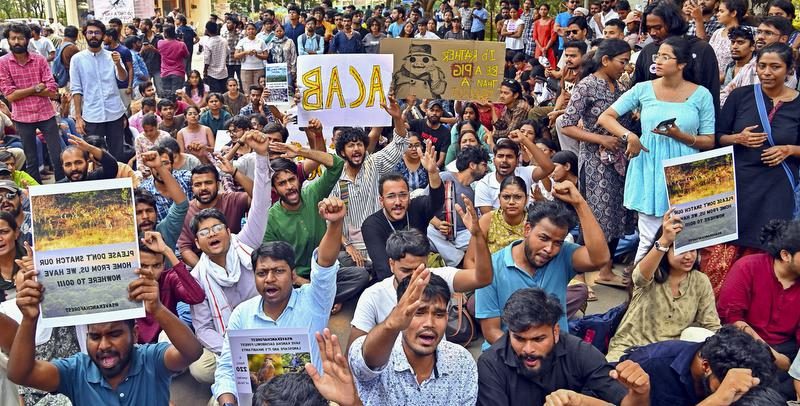
| SC, 2025 (Hyderabad) | Reprimanded Telangana Govt; directed restoration of Kancha Gachibowli forest |
Nagar Van Yojana
| Feature | Detail |
| Launch Year | 2020 |
| By | Ministry of Environment, Forest and Climate Change (MoEF&CC) |
| Target | Create 1,000 Urban Forests by 2027 |
| Impact (2023 Report) | Increased 1,445.81 sq. km in forest/tree cover |
Urbanisation & Concerns
| Issue | Explanation |
| Urban encroachment | Forest lands being allotted for industrial/commercial use (e.g., 400 acres of Kancha Gachibowli) |
| Health Impact | Higher air pollution, reduced biodiversity, increase in respiratory illnesses |
| Biodiversity loss | Threatens flora, fauna, and bird habitats |
| Loss of urban repose | Forests offer recreational, cultural, and psychological relief in cities |
Conclusion
Urban forests are crucial for sustainable urban living, and their destruction is a threat to environmental, cultural, and public health. Judicial vigilance and civil society activism are vital. Preservation must be prioritised alongside urban development.
Need for Autism Care
What is Autism Spectrum Disorder(ASD)
| Aspect | Details |
| Definition | A diverse group of neurodevelopmental conditions characterized by difficulties in social interaction, communication, and repetitive behaviors |
| Detection | Signs may appear in early childhood, but are often diagnosed much later |
| WHO View | Autism is not a disease but a developmental difference |
Causes of Autism
| Type | Examples |
| Genetic | Major factor; studies show up to 91% heritability (Tick et al., JAMA, 2016) |
| Environmental (possible) | – Advanced parental age – Prenatal exposure to air pollutants (Becerra et al., EHP, 2013) – Uterine environment No proven environmental toxin as a direct cause |
Reason for increase:
| – Broader diagnostic criteria – Increased awareness – More diagnoses of mild spectrum cases – Larger population base |
Autism is Preventable?
| Issue | Explanation |
| Scientific inaccuracy | No single gene/toxin identified for prevention |
| Social impact | Creates blame and stigma, especially on mothers/caregivers |
| Medical ethics | Diverts focus from supportive care and early intervention |
Need of the Hour in Autism Care:
| Priority Area | Explanation |
| Early Diagnosis | Many cases still go undiagnosed or are detected late |
| Early Intervention | Improves outcomes when provided during early development |
| Maternal Health Focus | Address non-communicable risks during pregnancy, not just infections |
| Combating Misinformation | Especially vaccine-related myths leading to a decline in immunisation |
| Psycho-Education for Families | Helps families understand the child’s unique needs |
| Individualised Therapy | No “one-size-fits-all”; therapy must be tailored to each child |
| Inclusive Policy | Build awareness, reduce stigma, and improve accessibility in schools and workplaces |
Conclusion
Autism care must shift from prevention myths to science-based support, focusing on early diagnosis, family education, and inclusive services. Maternal well-being and awareness must be prioritized in public health strategies.
FDI In India
Context: India’s net FDI sharply declined by 96% in FY25, reaching a mere $353 million, despite strong gross inflows, largely due to high repatriation and Indian outward investments.
What is Net FDI?
- Gross FDI:
- This is the total foreign investment coming into India.
- It includes all direct investments made by foreign companies in Indian businesses, industries, and assets.
- Net FDI: Gross FDI minus the following two components:
a. Repatriation: This refers to the profits and capital sent back to their home countries by foreign firms operating in India.
b. Outward FDI: This includes the investments made by Indian companies in foreign countries (e.g., acquiring companies abroad or setting up operations overseas).
Trend in Net FDI Over the Years
| Year | Net FDI (USD Billion) |
| 2020–21 | $44.0 billion |
| 2021–22 | $38.6 billion |
| 2022–23 | $28.0 billion |
| 2023–24 | $10.1 billion |
| 2024–25 | $0.35 billion |
Observation: Consistent 5-year decline in net FDI post-pandemic.
Reasons for Decline in Net FDI
| Factor | Impact |
| Increased Repatriation | Foreign firms pulling profits out of India |
| Higher Outward FDI | Indian companies are investing abroad more |
| Post-pandemic trend | The steady increase in capital outflow since 2020 |
| Not due to a drop in gross FDI | Inflows remain robust, but are offset by outflows |
Implications of Low Net FDI
| Area | Impact |
| Capital Account | Worsens the external sector balance |
| Rupee Pressure | Lower net inflows can weaken the rupee |
| Policy Rethink | Need to incentivize reinvestment over repatriation |
| Domestic Investment | Outward FDI may signal a lack of domestic opportunities |
| Investor Confidence | Could indicate cautious investor sentiment post-COVID |
Relevant Terms & Concepts
| Term | Meaning |
| FDI | Foreign Direct Investment — long-term capital investment from foreign entities in domestic businesses |
| Repatriation | Return of profits or capital by foreign firms to their home countries |
| Outward FDI | Investment made by Indian firms in foreign markets |
| Balance of Payments | Summary of India’s economic transactions with the rest of the world |
ASI Asks Archaeologist to Resubmit Keezhadi Report After Corrections
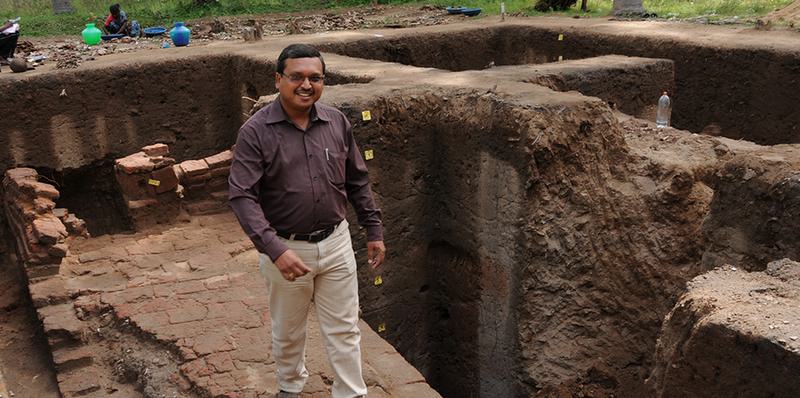
Context: The ASI has asked archaeologist Amarnath Ramakrishna to revise and resubmit his 982-page excavation report on the Keezhadi site for “authenticity” and scientific validation.
Key Points of the News
- What is the Keezhadi Excavation?
- Site believed to represent an ancient urban civilisation.
- Carbon dating of charcoal found at the site in 2017 suggested the settlement dates to around 200 BCE.
- Excavation methods included Accelerator Mass Spectrometry (AMS).
- Original Report Submission
- Ramakrishna submitted a 982-page report to ASI on January 30, 2023.
- ASI’s Objections
- Report needs corrections based on feedback from two unnamed experts.
- ASI questions:
- The nomenclature of three cultural periods.
- The time bracket of 8th century BCE to 5th century BCE for Period I.
- Urges scientific dating (AMS) and stratigraphic detail-based justification for all periods.
- States earliest reliable dating could be pre-300 BCE, not earlier.
- Historical Significance vs Bureaucratic Hurdles
- The delay in publication has drawn criticism from experts.
- R. Balakrishnan (Author, Journey of a Civilisation: Indus to Vaigai) called the delay “tragic” and “pathetic”.
- He termed it as possibly the result of “pressure of history” and lamented the lack of prompt dissemination.
Conclusion
This issue highlights the tension between archaeology and institutional control, where scientific findings await bureaucratic clearance, delaying historical understanding and public knowledge.
4% Housing for Persons with Disabilities
Context: The Union Urban Affairs Ministry has announced a 4% reservation in Central government housing for persons with disabilities (PwDs).
Key Points of the News
- Which Ministry is Involved?
- Ministry of Housing and Urban Affairs.
- Implemented through its attached office: Department of Estates (DoE).
- What is the New Policy?
- 4% reservation for persons with disabilities in Central government residential accommodations.
- Legal Basis
- The decision aligns with the Rights of Persons with Disabilities Act, 2016, which mandates equal access and non-discrimination in public services and opportunities.
- Administrative Body
- The Department of Estates (DoE) manages government housing, primarily in Delhi.
- Goal and Impact
- Aimed at equity, dignity, and accessibility.
- Supports the government’s larger vision of an inclusive and accessible India.
- Recognised as a significant step towards the empowerment of persons with disabilities.
Conclusion
The move is a progressive inclusion initiative that strengthens the government’s commitment to social justice and equal opportunity in public services.
Report on Adolescent Health Records
Context: The Lancet Commission on Adolescent Health and Wellbeing warns that without increased investments, global adolescent health will face severe challenges by 2030.
Key Facts and Findings
- Global Adolescent Population
- About 2 billion adolescents globally.They make up 24% of the world’s population.
- By 2100, 85% of adolescents will live in Africa or Asia.
- Health Crisis by 2030 (Projected)
- 464 million adolescents will be overweight.
- 42 million years of healthy life could be lost to mental disorders or suicide.
- Half of the world’s adolescents will live in multi-burden countries (facing overlapping health and social crises).
- Funding Gap
- Only 2.4% of total development health aid (2016–21) targeted adolescent health.
- Despite adolescents accounting for over 25% of the global population.
- Conflict and Displacement
- Adolescents in conflict-affected areas: 340 million.
- This figure has more than doubled since the 1990s.
- Digital Exposure
- 79% of people aged 15–24 use the Internet.
- 95%+ of adolescents in upper/middle-income countries are digitally connected.
- Raises concern over mental health and online safety.
Achievements
- 27% decline in adolescent mortality in 20 years.
- Due to reduced malnutrition, better disease control, and improved education, especially for girls.
- WHO sees this as a step toward gender equity and better life outcomes.
Recommendations by the Commission
- Increase Targeted Funding for adolescent health and well-being.
- Enabling Laws & Policies:
- Protect sexual and reproductive rights.
- Regulate commercial influencers on adolescent health (e.g. junk food, alcohol).
- Promote healthy and safe use of social media.
- Focus on Africa and Asia: as they will host the majority of adolescents in the coming decades.
Conclusion
The report emphasizes urgent investment, policy reforms, and global action to address the diverse and growing health needs of the world’s adolescent population.