
ONE-LINER Current Affairs
Environment & Climate Policy
- Carbon Pricing Instruments have grown from 5 (2005) to 80 (2025); now cover 28% of global GHG emissions.
- World Bank’s “State and Trends of Carbon Pricing 2025”: ETSs & carbon taxes generated $100+ billion in 2024.
- India’s Carbon Credit Trading Scheme (2023) includes:
- Compliance Mechanism (for obligated entities),
- Offset Mechanism (for voluntary emission reduction projects).
- COP29 (Baku) adopted final rules for the Paris Agreement’s Article 6.2 and 6.4 on cooperative approaches and crediting.
Forest Rights Act (FRA) Implementation
- 324 district FRA cells sanctioned under Dharti Aba Janjatiya Gram Utkarsh Abhiyaan (DAJGUA) across 18 states/UTs.
- These cells assist in claim documentation but do not interfere with Gram Sabha or DLC decisions.
- Concerns: Risk of creating a parallel FRA mechanism beyond the Act’s framework.
- Pendency is high in Assam (60%), Telangana (50+ %); major reasons: infrequent DLC/SDLC meetings & forest department delays.
Digital Agriculture Mission (2024)
- Govt announced ₹6,000 crore for Agri Stack, including:
- ₹4,000 crore: Farmer Registries, legal heir integration.
- ₹2,000 crore: Digital Crop Surveys (Geo-tagged).
- Agri Stack will use federated architecture to function as a digital public infrastructure (like Aadhaar).
- Components include: Krishi Decision Support System, Soil Mapping, Digital GCES, and Crop Sown Registry.
Central Sector Scheme (CSS) Funding Guidelines
- “Just-In-Time” release: max 25% fund disbursal at once; next only after 75% prior usage.
- Unused funds lapse at FY end; PFMS use mandatory.
- Sunset clause (2017) mandates fixed timelines for scheme reviews.
Forest Fire (Reasi, J&K)
- Massive forest fire near NH-144A; causes include:
- Natural: Lightning, drought.
- Human-induced: Slash-and-burn, carelessness, climate change.
- Response Tools: Forest Fire Alert System (FIRE 2.0) using MODIS & SNPP-VIIRS satellite data.
Women in Politics (UN Women 2025 Factsheet)
- India ranks 174/181 countries for women in Cabinet positions (only 5.6%).
- Globally, only 22.9% of cabinet ministers are women; women mostly get social sector portfolios.
AviList – Global Bird Species List
- AviList replaces IOC and Clements lists; includes:
- 11,131 species, 19,879 subspecies, 252 families.
- Joint effort by: BirdLife Intl., Cornell Lab of Ornithology, IOC Union, etc.
Social Issues – Intergenerational Communication Gap
- Youth–Elder gap due to education, emotional disconnect, and busy lifestyles.
- Recommendations:
- Aging Sensitization in education,
- Digital Buddy programmes,
- Wisdom Exchange initiatives.
Aviation – Air India Crash
- Black box recovered by AAIB; contains Flight Data Recorder & Cockpit Voice Recorder.
- AAIB (est. 2012) investigates serious incidents per Annex 13 of the Chicago Convention; probes aircraft over 2,250 kg AUW.
Taxation on Virtual Digital Assets (VDAs)
- Flat 30% tax on VDA gains + 1% TDS on transfers (per Finance Act 2022).
- CBDT’s NUDGE framework promotes voluntary disclosures.
Statins & Sepsis
- New study: Statins reduce death rate in sepsis due to anti-inflammatory, immunomodulatory, and anti-clotting effects.
Shipki La Border Tourism (Himachal Pradesh)
- Pass at 3,930m, in Kinnaur district, through which the Sutlej River enters India.
- Historical trade route; shut after COVID-19; now reopened for border tourism.
Israel–Iran Escalation – Strategic Warnings & Military Threats
- Israel warned Iran that “Tehran will burn” if Iranian strikes continue to target Israeli civilians.
- The statement follows Iran’s overnight drone and missile attacks on Jerusalem and Tel Aviv, which killed 3 civilians and wounded dozens.
- Israel launched an unprecedented airstrike on Iran earlier, targeting nuclear facilities and killing top Iranian commanders and civilians.
- Israeli PM Netanyahu claimed Israel had dealt a “real blow to Iran’s nuclear programme”.
- Israeli Defence Minister Katz blamed Ayatollah Khamenei for endangering Iranian civilians, particularly those in Tehran.
- Israel’s Brigadier General Effie Defrin said “aerial freedom of action” now extends from western Iran to Tehran.
- Israel asserts that Tehran is no longer immune to aerial targeting due to recent successful operations.
- The conflict reflects escalating tit-for-tat attacks, with the potential to draw in regional and global actors.
Air India AI-171 Crash: Government Response Panel
High-Level Committee Formation
- Centre set up a high-level committee headed by the Union Home Secretary to formulate SOPs and response protocols after the AI-171 crash in Ahmedabad.
- Mandate: Recommend guidelines to prevent and manage aviation accidents; report to be submitted within 3 months.
Panel’s Scope of Work
- Assess root cause of the crash and contributing factors:
- Mechanical failure
- Human error
- Weather conditions
- Regulatory lapses
- Suggest policy changes, training enhancements, emergency protocols, and international best practices.
- Evaluate emergency response effectiveness and recommend agency-wise roles for crash response and coordination.
Investigation Independence
- The committee will not replace or interfere with the official probe by the Aircraft Accident Investigation Bureau (AAIB).
Committee Composition
- Chair: Home Secretary of India
- Members include:
- Joint Secretary, MHA
- State Home Dept. & Disaster Response Authority (Gujarat)
- Ahmedabad Police Commissioner
- DG, Bureau of Civil Aviation Security
- DGCA & DG, IAF Inspection and Safety
- Special Director, IB
- Director, Forensic Science Services
Data Access & Investigation Methods
- Will access:
- Flight Data Recorder (Black Box)
- Cockpit Voice Recorder (CVR)
- ATC logs, aircraft maintenance records, witness testimonies
- Will conduct site inspections and interviews with crew, ATC staff, and technical personnel.
- May collaborate with international agencies for technical insights.
Myanmar Civil Conflict
Current Situation
- Over 600 people evacuated from Saung Nang Khae (Shan State) due to heavy fighting between the Myanmar military and anti-coup guerrillas.
- Evacuation efforts led by Kayan New Land Party’s youth wing; the total displaced could exceed 1,500 people.
- Myanmar has been in civil war since the 2021 coup, with over 3.5 million displaced, as per UN figures.
Recent Developments
- Military and some rebels had pledged a truce earlier this month after the March 2025 earthquake (magnitude 7.7) that killed 3,700+ people.
- Despite losses, the Myanmar military has begun conscription to replenish its ranks.
- The military still retains superior hardware, largely supplied by China and Russia, giving it an operational edge despite guerrilla gains.
Key Implications
- Ongoing violence undermines truce efforts and post-disaster recovery.
- Humanitarian crisis continues to deepen, with families forced into makeshift convoys and shelters.
- Conflict reflects the multipolar nature of resistance, involving ethnic armed organisations and youth-led groups.
Iran–U.S. Nuclear Talks Suspended Amid Israel–Iran Escalation
Diplomatic Fallout
- Iran’s Foreign Minister Abbas Araghchi declared nuclear talks with the U.S. “unjustifiable” after Israeli air strikes on Iran’s nuclear sites.
- The 6th round of indirect U.S.–Iran nuclear talks, scheduled in Oman, was cancelled.
- Oman’s Foreign Minister Badr al-Busaidi confirmed cancellation but reaffirmed dialogue as the only path to peace.
Blame on the U.S.
- Araghchi blamed the strikes on “direct support by Washington”, though the U.S. denies involvement in the Israeli offensive.
- The U.S. is, however, assisting Israel with ground-based air defence systems to intercept Iranian missiles.
Iran’s Retaliation
- Iran’s Supreme Leader Khamenei vowed continued retaliatory attacks on Israel, calling Israeli strikes a “great crime”.
- Iran launched multiple missile waves on Israel; 3 civilians killed, 76 injured, mostly around Tel Aviv and Rishon Lezion.
- Seven Israeli soldiers sustained minor injuries — the first reported military casualties on the Israeli side.
SPArc Therapy – Proton Arc Therapy Innovation
What is SPArc?
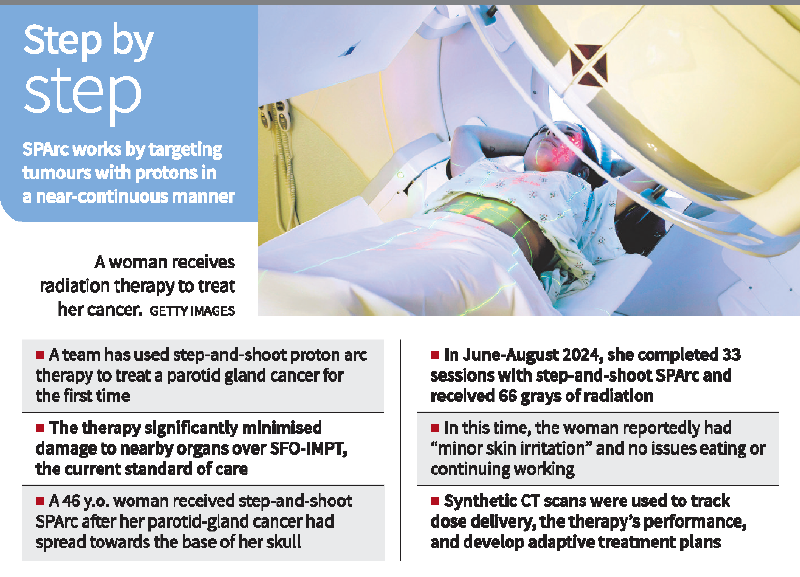
- SPArc = Spot-scanning Proton Arc Therapy, a radiation technique that targets tumours precisely while sparing nearby healthy tissues.
- Step-and-shoot SPArc uses a pre-set beam delivery sequence; dynamic SPArc adjusts energy and direction in real-time (still under development).
Clinical Use Case
- First clinical case: 46-year-old woman with parotid gland cancer extending to the base of skull, treated with 33 SPArc sessions.
- Compared to standard SFO-IMPT, SPArc reduced radiation to:
- Brainstem by 10%
- Optical chiasm by 56%
- Oral cavity by 72%
- Spinal canal by 90%
Treatment Methodology
- Used cone-beam CT scans + machine learning to create synthetic CTs for accurate dose tracking.
- Dose ‘painting’ via scanning multiple energy layers (each layer = a tissue slice) with proton beams.
- Nine beam angles in a 180º arc used to deliver the treatment, rotating 20º between each beam.
- Each session lasted 15–18 minutes.
Benefits
- Highly effective for tumours in complex or sensitive regions (e.g., skull base).
- Minimal side effects: only minor skin irritation, no disruption to eating or daily work.
Concerns
- Risk of geographical miss (tumour shrinking/moving during treatment).
- High cost may limit access; needs careful indication to avoid overuse.
- Technology is still in early adoption, especially dynamic SPArc which awaits regulatory clearance.
Relevance
- Important for GS3 (Science & Tech) and Medical innovations in cancer treatment.
- Also applicable in Essay / Ethics for themes on technological justice and healthcare equity
Silver Recovery from E-waste Using Cooking Oils
Industrial Importance of Silver
- Silver is more useful than gold in energy & electronics, especially in solar panels and mobile devices.
- India generates 108 GW of solar power, with each mobile phone using 100–200 mg, and a laptop ~350 mg of silver.
- Globally, 7,275 metric tonnes of silver are used in electronics, but only ~15% is recycled.
Demand Surge & Clean Energy Link
- Sprott Silver Report (2025): Silver is critical to the clean energy transition.
- Silver demand to rise 170%, as EVs, solar panels, and electrified transport expand.
- IEA predicts 50% of global car sales will be electric by 2035, further boosting silver needs.
New Method of Silver Recovery
- Finnish researchers (Anze Zupanc & Prof. Timo Repo) developed a non-toxic method using fatty acids (like oleic, linolenic acid) found in cooking oils.
- Unsaturated fatty acids (from olive, groundnut, and sunflower oil) help separate silver from e-waste without hazardous chemicals like cyanide or strong acids.
Eco-Friendly & Recyclable
- These oils are recyclable, safer than organic solvents, and ideal for urban mining of silver from motherboards and electronic components.
- Applicable to Waste Electrical and Electronic Equipment (WEEE) management
Arunachal Pradesh: Decade of Hydropower
Hydropower Vision & Target
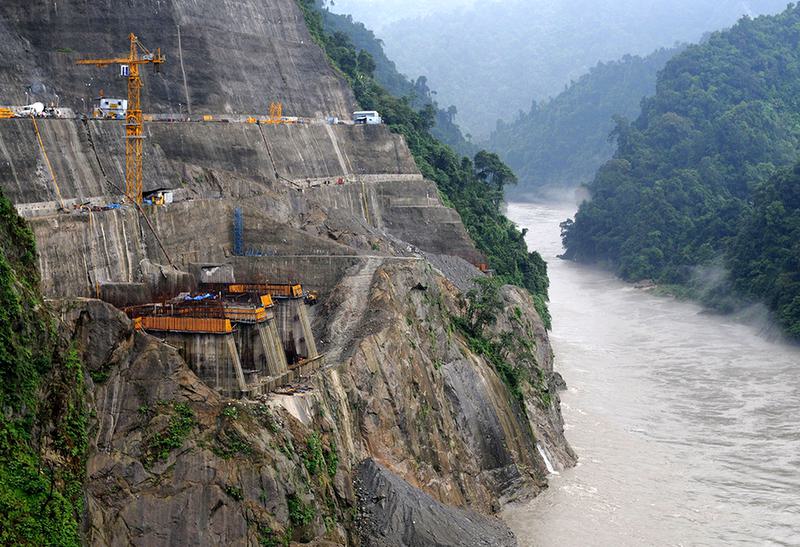
- Arunachal Pradesh declared 2025–2035 as ‘Decade of Hydropower’ to harness its potential of 58,000 MW.
- State to implement mega, large, and small hydro projects with a supportive policy & regulatory framework.
- The state expects ₹4,525 crore annual revenue by 2035 from HEPs (hydroelectric projects).
Revenue Strategy
- The state will receive 12% free power from each HEP + 1% additional for the Local Area Development Fund.
- Cabinet approved the creation of an Escrow Account for transparent management of free power revenue.
- Goal: Use proceeds for long-term sustainable growth and industrial ecosystem development.
Major Projects & National Relevance
- Cabinet discussed consensus-building for the Siang Upper Multipurpose Project (SUMP) (capacity: 11,000 MW).
- SUMP is a national project (since 2008) and a strategic counter to China’s 60,000 MW dam on Yarlung Tsangpo in Tibet.
- Local resistance from Siang, East Siang, and Upper Siang districts over pre-feasibility surveys.
Public Engagement & Rehabilitation
- Cabinet directed continuous engagement with PAFs (Project-Affected Families) to ensure:
- Fair compensation & solatium
- Transparent land/property valuation
- Resettlement & rehabilitation planning
Urban Development Planning
- Two new authorities formed:
- New Yingkiong Development Authority
- New Geku Development Authority — to develop future-ready alternate towns.
- Necklace Road project survey along the Siang River initiated above the likely submergence zone.
Cherrapunji Gin – First Exported Alcohol Brand from Northeast India
Key Milestone
- Cherrapunji Eastern Craft Gin becomes the first alcohol label from Northeast India to be exported, announced on World Gin Day 2025.
Export Markets
- Currently available in parts of the European Union.
- Expected expansion to Japan, Thailand, and the UK by the end of 2025.
Production & Identity
- Made in small batches using traditional copper stills.
- Uses naturally harvested rainwater from Sohra (Cherrapunji) and Mawsynram—the wettest places on Earth.
Local Botanical Ingredients
- Flavour built on:
- Kaji nemu (Assamese lemon)
- Khasi mandarin
- Sohmarit pepper
- Smoked black cardamom
- Pine-smoked tea
Packaging Innovation
- Packaged in military-grade stainless steel bottles — a reusable, sustainable alternative to single-use glass.
Cultural & Economic Significance
- Part of a global revival in artisanal gin, which emphasizes local storytelling and ingredients.
- In India, craft gin now features in urban bars and home bars, rising with cocktail culture and domestic premium brands.
Awards & Recognition
- 13 international awards since launch in 2023.
- Includes:
- ‘Master’ medal at Global Spirits Masters 2023
- Silver at World Gin Awards
Government Role
- Meghalaya government provided support enabling the gin’s international success.
PM Narendra Modi’s 3-Nation Tour
Countries & Key Firsts
- PM Modi embarks on a tour to Cyprus, Canada, and Croatia (June 16–19, 2025).
- First Indian PM visit to Cyprus since 2002 and first-ever visit to Croatia since its independence in 1991.
Major Focus Areas
- Attending G-7 Summit as one of five special invitees — Modi’s 6th consecutive participation.
- Key agenda at G-7:
- Energy security,
- Technology & Innovation,
- AI-Energy nexus,
- Quantum technologies.
Canada Relations & Diplomacy
- Expected “reset” in strained India–Canada ties during meeting with Canadian PM Mark Carney.
- Aim: Restoration of diplomatic presence in both countries following months of tension.
Global Geopolitical Context
- Tour comes after Operation Sindoor (India’s strikes on Pakistan).
- PM to raise terrorism and Pakistan’s role at UN, FATF, and other multilateral platforms.
- Likely encounter with U.S. President Donald Trump—first since his claim of mediating India-Pakistan truce (denied by India).
- Visit occurs amid global crises:
- Israel–Iran conflict,
- Gaza bombardment,
- Russia–Ukraine war,
- U.S. tariff-led economic disruptions.
Cyprus Visit – Strategic Signalling
- Talks with President Nikos Christodoulides in Nicosia on June 16.
- Discussion on India-Middle East Economic Corridor (IMEC) stalled since the Israel crisis (2023).
- A visit to Cyprus is also seen as a signal to Turkiye, which backed Pakistan during Operation Sindoor.
Croatia Visit
- Final stop: Zagreb on June 18 for talks with Croatian PM Andrej Plenković.
India’s Air Conditioner Temperature Control Policy
Background & Evolution
- Bureau of Energy Efficiency (BEE) issued voluntary AC temperature guidelines in 2018 for commercial establishments (airports, malls, govt offices, etc.).
- In 2020, the government mandated a default AC temperature of 24°C, though users could adjust it freely.
- In 2025, new proposal: hardwire ACs to operate between 20°C and 28°C only — removing full user control.
Objectives
- Improve energy efficiency, reduce power demand from the cooling sector.
- Promote public health by avoiding excessively low temperatures indoors.
Rationale & Energy Forecast
- BEE estimates India’s total AC load to reach 200 GW by 2030 (currently 50 GW = 1/5 of India’s peak power demand).
- AC penetration is only ~6% of Indian households, meaning demand will grow exponentially.
Global Comparisons
- Japan already encourages a default 28°C setting in offices/public buildings for energy conservation.
India’s Diplomatic Role in the Iran–Israel Conflict
Bilateral Engagements
- External Affairs Minister (EAM) S. Jaishankar held phone calls with:
- Iranian FM Abbas Araghchi
- Israeli FM Gideon Sa’ar
- Conversations aimed at preventing escalation and urging a return to diplomacy.
Strategic Importance
- Both Israel and Iran are strategic partners of India.
- Israel: Key in defence, agriculture, and technology cooperation; hosts ~30,000 Indian nationals.
- Iran: Regional Gulf power with ~10 million Indian expat workers; crucial for Chabahar Port, energy, and regional connectivity.
Recent Context
- Calls followed the intensification of conflict with:
- Israeli strikes on Iranian nuclear research centres.
- Iranian retaliation with three waves of drone and missile attacks.
- PM Modi also spoke to Israeli PM Netanyahu, urging peace and Gulf stability, vital for India’s economic and energy security.
India–Iran Recent Ties
- 20th India–Iran Joint Commission Meeting held in New Delhi (May 7–8, 2025).
- Visit marked the first official trip of Araghchi to India since becoming Foreign Minister in August 2024.
India’s Position on Israel–Iran Conflict in Multilateral Forums
UNGA Abstention
- India abstained from a UN General Assembly resolution supporting a ceasefire in Gaza, reflecting its balanced stance on Middle East conflicts.
SCO Statement
- The Shanghai Cooperation Organisation (SCO) issued a statement strongly condemning Israel’s strikes on Iran, citing civilian casualties and international law violations.
- India distanced itself, stating it “did not participate in the discussions” related to the SCO statement.
India’s Official Position
- The Ministry of External Affairs (MEA) reiterated that Israel–Iran hostilities must be resolved through dialogue and diplomacy.
- India’s neutral stance indicates its effort to maintain strategic autonomy in complex West Asia geopolitics.