
One Liner Current Affairs
Economy & Industry
- Govt notified SEZ (Amendment) Rules 2025, reducing land requirement for semiconductor SEZs from 50 ha to 10 ha.
- Net Foreign Exchange (NFE) must now include free-of-cost (FOC) transactions for semiconductor units.
- SEZs are duty-free enclaves considered foreign territories for trade and tariffs; the SEZ Act was passed in 2005.
- Baba Kalyani Committee suggested a shift from export growth to 3Es: Employment & Economic Enclaves.
Environment & Climate
- Ocean acidification has breached the planetary boundary, termed the “evil twin” of global warming.
- Ocean absorbs ~25% of annual anthropogenic CO₂, forming carbonic acid → acidic oceans.
- Impact: Damages calcium carbonate organisms (e.g., corals), harms phytoplankton, and affects cloud formation via DMS.
- The Planetary Boundaries framework includes 9 systems (e.g., climate change, biosphere integrity, ocean acidification).
Polity & Governance
- SC in Amlesh Kumar v. State of Bihar: Narco-analysis permissible only voluntarily and during evidence presentation.
- Forced narco-analysis violates Articles 20(3) (self-incrimination) and 21 (life and liberty).
Infrastructure
- NHAI launched the first-ever Road Sector Asset Monetization Strategy (2025–30) to boost PPP.
- Modes: Toll-Operate-Transfer (ToT), InvITs, and securitization of assets.
- InvITs are mutual fund-like structures allowing investment in infrastructure; introduced in 2014.
Science & Tech
- 523 Starlink satellites lost due to increased atmospheric drag during peak of Solar Cycle (2020–24).
- Space debris (>1 cm) estimated to be 1.2 million; risk of Kessler Syndrome growing.
- India’s debris control: ISRO’s IS4OM, NETRA, and DFSM 2030.
Labour & Economy
- India’s gig workforce projected to reach 62 million by 2047 (7.7 million in 2020–21).
- Gig economy: 56% of new jobs; challenges include job insecurity, poor grievance redressal, and gender disparity.
- NITI Aayog suggests national registry, minimum wage, and social security for gig workers.
Science & Innovations
- Wendelstein 7-X Stellarator in Germany achieved plasma heating to 30 million °C.
- Stellarators use twisted magnetic fields for fusion; more flexible than Tokamaks.
Metals & Materials
- New nickel extraction method cuts CO₂ emissions by 84%.
- Nickel used in EV batteries; found in minerals like pentlandite and garnierite.
Biodiversity & Experiments
- Astronaut Shubhanshu Shukla to take tardigrades to ISS; organisms known for extreme survival via cryptobiosis.
- Tardigrades include the Eutardigrada and Heterotardigrada classes.
International Cooperation
- NTPC partnered with SE for ALL (hosted by UNOPS) to advance energy transition in developing countries.
- SEforALL was launched by Ban Ki-moon in 2011; UNOPS is now an independent UN agency based in Copenhagen.
Governance & Institutions
- NIIF (est. 2015) is a sovereign-linked fund manager with 49% govt shareholding; SEBI-registered AIF.
- NIIF comprises Master Fund, Fund of Funds, and India-Japan Fund, focusing on infrastructure and climate.
Standards & Accreditation
- QCI celebrated World Accreditation Day (June 9); 2025 theme: “Empowering SMEs”.
- QCI (est. 1996) operates via a PPP model under DPIIT, Ministry of Commerce and Industry.
Social Issues & UN News
- UNGA declared 2026 as the International Year of the Woman Farmer, proposed by the USA.
- Aims to highlight women’s role in food security and poverty eradication.
History & Culture
- PM paid tribute to Birsa Munda (1875–1900), leader of the Ulgulan rebellion against the British.
- Known as ‘Dharti Aaba’, he founded the Birsait sect and led reforms against superstitions and alcoholism.
Miscellaneous
- Ejiao: Gelatin made from donkey skin used in Chinese medicine; led to soaring donkey prices in Pakistan.
UN Report Insights
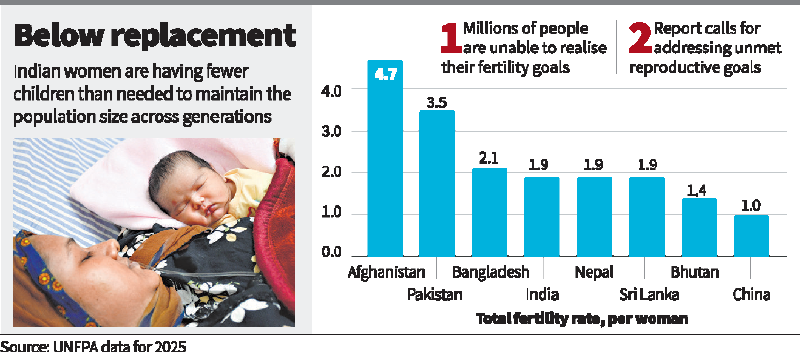
Population & Demography (India – 2025)
- India’s population reached 146.39 crore by April 2025 – UNFPA State of World Population Report.
- Total Fertility Rate (TFR) declined to 1.9, below the replacement level of 2.1.
- Replacement level TFR is the fertility rate required to maintain a stable population across generations.
- India’s population is expected to peak at 170 crore before declining in ~40 years.
- As of 2025, China’s population is 141.61 crore – India is now the most populous nation.
- The Last Census was conducted in 2011; the next is expected to be completed by March 2027 (postponed from 2021).
Age-wise Distribution
- Working-age population (15–64 years): 68% of India’s total population.
- Youth population:
- Age 0–14: 24%
- Age 10–19: 17%
- Age 10–24: 26%
- Elderly population (65+): Currently 7%, expected to rise with increasing life expectancy.
Life Expectancy (2025 Projection)
- Male: 71 years
- Female: 74 years
UN Report Insights
- UNFPA report titled “State of the World Population 2025: The Real Fertility Crisis”.
- Calls the real crisis the gap between desired and actual fertility, not overpopulation.
- Emphasizes reproductive agency – the ability to make free, informed reproductive choices.
- Data based on household surveys like DHS, MICS, and World Population Prospects 2024.
Ship Fire & Oil Spill Threat – Kerala Coast

- M.V. Wan Hai 503, a Singapore-flagged container ship, caught fire 88 nautical miles off the Kozhikode coast.
- The fire began after a container exploded en route from Colombo to Mumbai.
- The vessel carries 157 hazardous containers, including flammable & toxic substances.
- Ship is adrift, tilted 10–15° to port (left); some containers have fallen overboard.
- The ship also holds 2,000 tonnes of fuel oil and 240 tonnes of diesel, posing an explosion risk.
- Coast Guard vessels Samudra Prahari, Sachet, and Samarth are involved in firefighting & salvage.
- INCOIS has issued alerts for oil spills and drifting containers, using its Search and Rescue Aid Tool for tracking.
- Simulations suggest containers may drift for 3+ days, with possible beaching between Kozhikode and Kochi.
- Kozhikode Collector activated a district-level pollution response team for potential fuel spill mitigation.
- Four crew missing, six hospitalized (rescued via lifeboat, not by jumping into water).
KATRIN & Neutrino Mass Findings
- KATRIN (Karlsruhe Tritium Neutrino Experiment) is a German project to directly measure neutrino mass.
- The KATRIN spectrometer, weighing 200 tonnes, was transported via an 8,600-km route due to its size.
- KATRIN estimates neutrino mass by analysing the maximum energy of electrons emitted during tritium decay.
- Recent KATRIN data (2019–2021) sets a new upper limit on the sum of neutrino masses: < 8.8 × 10⁷ electron mass.
- This is a 2× improvement over the previous best direct constraint.
- The experiment analysed 36 million electrons over 259 days of data-taking in 5 runs.
Why Neutrinos Matter in Physics
- Neutrinos are among the lightest and most elusive subatomic particles, discovered in 1938.
- Three types of neutrinos exist; particle oscillation experiments prove that at least two have mass.
- However, oscillations only reveal mass-squared differences, not absolute values.
- In the Standard Model, neutrinos are predicted to be massless, suggesting physics beyond the Standard Model.
Key Neutrino Mysteries
- Neutrino mass origin: Unknown; extremely small and unexplained by current theories.
- Neutrinos as their antiparticles: Possibly — if neutrinos have a Majorana mass, they could be self-conjugate.
- Neutrinoless double beta decay could confirm the Majorana nature, being actively searched for.
Other Neutrino Mass Experiments
- Cosmology-based mass limit: ~1.4 × 10⁷ electron mass, but relies on assumptions about the early universe.
- KATRIN’s advantage: Provides model-independent and assumption-free direct measurements.
Challenges in Neutrino Detection
- Neutrinos rarely interact: a light year’s thickness of metal is needed to stop one from the Sun.
- Their low mass and high velocity make them extremely difficult to trap or weigh experimentally.
Green Mining Vehicles & Policy Interventions
- A Sustainable Mining Initiative-FIMI–Deloitte report calls for targeted policies to promote green Heavy Earth Moving Machinery (HEMM) in India.
- India lacks a coherent policy framework integrating incentives, regulations, infrastructure, and demand-side actions for cleaner mining vehicles.
- High upfront costs of green HEMMs are a key deterrent to adoption.
- Suggested incentives: Capital subsidies, fleet-size linked premium rebates, and upfront payment relaxations.
- Additional enablers: Power subsidies for EV charging, low-interest financing, and star-rating reforms.
- Future strategies may include Production-Linked Incentives (PLI) and mandatory adoption clauses for cleaner vehicles.
- The number of HEMMs is expected to rise significantly by 2035, increasing fuel usage and CO₂ emissions.
- Urgent need to adopt alternative fuel HEMMs (electric, hybrid, hydrogen) to meet net-zero targets.
- India’s mining equipment market was valued at $6.4 billion in 2024, projected to reach $11.34 billion by 2033 at a 6.5% CAGR.
FSDC looks to enhance cybersecurity
- FSDC (Financial Stability and Development Council) meeting, chaired by Finance Minister Nirmala Sitharaman, focused on cyber resilience and regulatory ease.
- FSDC plans to strengthen the cybersecurity framework through a sector-specific strategy based on FSAP 2024–25 recommendations.
- Discussed reducing unclaimed assets in the financial system and enabling seamless refunds to rightful owners.
- Proposed to introduce common KYC norms, including simplification for Non-Resident Indians (NRIs) in the securities market.
Neo-Ottoman Foreign Policy under Erdogan
- Under President Recep Tayyip Erdogan, Türkiye is pursuing a neo-Ottoman, Islamist-leaning foreign policy.
- The policy aims to build ties with Muslim-majority nations while maintaining Türkiye’s Western alliances (e.g., NATO).
- Türkiye maintains a military base in Qatar and backs Islamist groups like HTS in Syria and the Muslim Brotherhood in Egypt and Libya.
- Türkiye supported Pakistan during India–Pakistan tensions, showcasing an ideological tilt.
Historical & Ideological Roots
- Inspired by Ittihad-i Islam (Unity of Islam), a doctrine from Ottoman Sultan Hamid II’s reign (1876–1909).
- Necmettin Erbakan, a pre-Erdogan Islamist leader, influenced the AKP’s ideology; he opposed EU integration.
- Erdogan’s AKP, formed in 2001, rose from the Virtue Party, with roots in Islamist politics.
Foreign Policy in Action
- The Arab Spring (2011) marked Türkiye’s shift from pro-Western pragmatism to ideological activism.
- Türkiye backed protesters and Islamist movements (e.g., Muslim Brotherhood in Egypt, HTS in Syria, Tripoli gov. in Libya).
- Syria (2024): Türkiye-backed HTS captured Damascus, raising Ankara’s influence.
- Azerbaijan–Armenia War (2023): Türkiye supported Azerbaijan using Turkish drones, challenging Russia.
- Türkiye also supplied drones to Ukraine, but didn’t impose sanctions on Russia.
- Erdogan balanced diplomacy by backing Sweden/Finland’s NATO entry while negotiating with the US.
Balancing Act
- Turkey plays between Islamist assertiveness and Western alliance (NATO, US bases, Incirlik).
- Despite supporting Islamist causes, Erdogan avoids fully alienating the West.
- Turkey bought Russia’s S-400 missiles, causing US concern, but maintained ties with NATO.
Challenges
- Turkey faces economic crisis: hyperinflation, lira depreciation, high unemployment, and social unrest.
- Erdogan has centralized power via constitutional changes to a presidential system.
- Crackdown on dissent: Arrest of Istanbul Mayor Ekrem Imamoglu, the opposition’s 2028 candidate.
- Long-term success of Türkiye’s strategic gains (e.g., Syria, Libya, Caucasus) remains uncertain due to regional instability.
U.S. Visa & Immigration Enforcement
- The U.S. Embassy stated it will not tolerate visa abuse or violations of U.S. law, stressing there’s no right to visit the U.S.
- The remark followed a viral video showing an Indian student being handcuffed at Newark Airport, allegedly from Haryana.
- The U.S. reiterated it welcomes legitimate travelers, but will enforce strict immigration rules.
- India’s Ministry of External Affairs (MEA) has formally raised the issue with the U.S. Embassy in Delhi.
- Indian Embassy in Washington D.C. and Consulate in New York are also in contact with U.S. authorities.
- The student’s details, flight, and destination are still under official verification.
- The incident rekindled concerns after visuals of shackled Indian deportees circulated during earlier U.S. repatriations.
Deputy Speaker of Lok Sabha
- Congress President Mallikarjun Kharge urged PM Modi to initiate the election of the Deputy Speaker of Lok Sabha.
- In a letter, he stated that keeping the post vacant violates the Constitution and democratic norms.
- Article 93 of the Indian Constitution mandates the election of both the Speaker and Deputy Speaker in the Lok Sabha.
- The Deputy Speaker is the second-highest presiding officer in the Lok Sabha.
- Conventionally, the Deputy Speaker is elected from the principal Opposition party.
- Though no official proposal has been made, Kodikunnil Suresh (MP, Kerala) is seen as a front-runner for the post.
- The letter was sent ahead of the Monsoon Session of Parliament starting July 21, 2025.
Weight-Loss Drugs in Real-World vs Clinical Trials
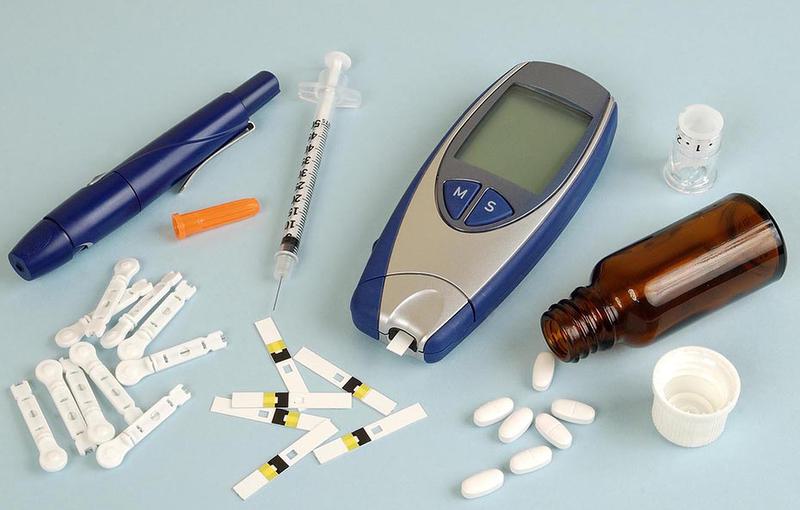
- A U.S. study found that semaglutide and tirzepatide lead to lower weight loss in real-world use compared to clinical trials.
- Study by the Cleveland Clinic, Ohio, published in the journal Obesity (June 10, 2025).
- Both drugs are GLP-1 injectables, FDA-approved for Type 2 diabetes and chronic weight management.
- Real-world effectiveness is reduced due to early drug discontinuation and lower maintenance dosages.
- Factors associated with ≥10% weight loss after 1 year: continued medication, late (not early) discontinuation, high dosage, tirzepatide use, and being female.
- Indian expert Dr. V. Mohan notes poor compliance in real-world vs clinical trials due to lack of follow-up and out-of-pocket costs.
- Dr. Anoop Misra highlights that cost and lifestyle non-compliance may worsen outcomes in India.
- Study findings can help doctors and patients make more informed treatment decisions.
Flue Gas Desulphurisation (FGD) in Thermal Power Plants
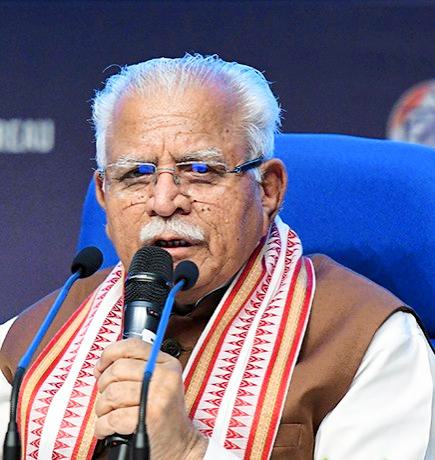
- Union Power Minister Manohar Lal Khattar said the CPCB will decide on whether FGD units should remain mandatory in coal-fired thermal power plants (TPPs).
- A high-powered panel led by Principal Scientific Adviser Ajay Sood recommended scrapping mandatory FGD installation.
- As of 2025, 92% of India’s 600 coal-fired TPPs have not installed FGD units.
- The recommendation exempts nearly 80% of these plants from installing FGDs.
- Three deadline extensions since 2017; the latest one mandates compliance by 2027–2030.
- FGDs are retrofitted to reduce sulphur dioxide (SO₂) emissions from coal combustion.
- SO₂ emissions form sulphate aerosols, which can reduce global warming effects but increase particulate pollution and respiratory illness.
- CSIR and IIT Delhi studies claim sulphate aerosols from coal plants contribute <5% to health impacts.
- The minister stated some SO₂ presence is necessary to offset warming effects, downplaying health risks.
NCERT Social Science Textbooks Revision
- Sanjeev Sanyal, PM-EAC member and Chair of NCERT Economics Group, stated that new Class 7 NCERT books discard old “poverty and colonised narratives.”
- New Class 7 textbook “Exploring Society: India and Beyond” merges subjects of history, geography, and political/social life.
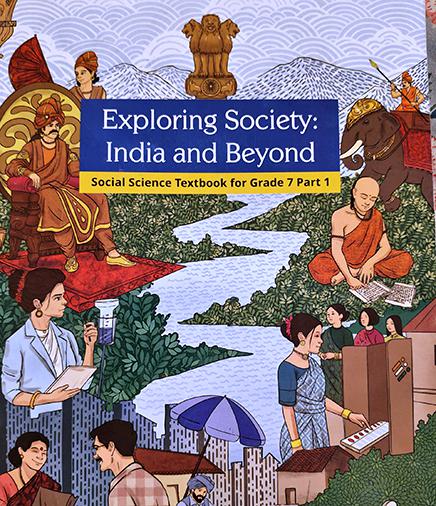
- The economics section now uses modern examples, digital banking, and historical insights (e.g., Hampi Bazaar, Chalukya coinage, UPI system).
- The “From Barter to Money” chapter traces the evolution of money, from barter to net banking and UPI.
- The “Understanding Markets” chapter contrasts historical markets (e.g., Hampi) with modern consumer behavior.
- The earlier Class 7 book focused more on agrarian markets, cooperatives, labour exploitation, and fair price shops.
- Old books emphasized poverty, rural distress, and women’s self-help groups in economics topics.
- New Class 6 textbook begins with a quote from Kautilya’s Arthashastra and discusses Amul and the dairy revolution.
- The old Class 6 book had detailed chapters on Rural and Urban Livelihoods, including farmers in debt and fishing villages.
- These earlier case studies have been removed or toned down in the new editions.
- Class 8 textbooks are next in line for revision, according to Sanyal.
Radio Telephony Restricted (Aeronautical)
- From November 2025, the DGCA will take over the conduct of the Radio Telephony Restricted (RTR-A) exam from the WPC (under MEITY).
- An exam is mandatory for pilots, aircraft maintenance engineers, and flight dispatchers seeking aviation licences.
- The move is aimed at creating a single-window clearance system and streamlining the exam process.
- A committee has been formed to draft the RTR syllabus, and the rules will be notified soon.
- The exam has faced issues of bribery, answer swapping, and lack of transparency under the previous system.
- Some pilot aspirants paid bribes (up to ₹2 lakh) or went abroad (e.g., Canada) to avoid unfair practices in India.
- Aviation experts urge adherence to ICAO Annex 1 standards for personnel licensing to ensure credibility and fairness.
- India is criticized for having multiple disjointed exams, unlike global standards, adding hardship to aviation personnel.
India’s Multi-Party Delegation Diplomacy
- PM met with members of multi-party delegations who visited 33 foreign capitals and the European Union as part of India’s diplomatic outreach.
- The delegations were formed following Operation Sindoor to project India’s unified stand against terrorism.
- PM Modi praised the delegations for reinforcing India’s unity and promoting the Indian narrative globally.
- He emphasized strengthening inter-parliamentary friendship groups to deepen diplomatic relations.
- Over 50 members, including current MPs, ex-MPs, and former diplomats, were part of these delegations.
- PM Modi cited positive outcomes, including warm responses in countries like Saudi Arabia.
- External Affairs Minister S. Jaishankar had earlier commended the delegations for exposing Pakistan-sponsored terrorism.
- PM’s remarks were also shared on X (formerly Twitter), reaffirming India’s commitment to peace and anti-terror efforts.
Maternity benefits are integral to the right to life, health, and equality
- The SC overturned a Madras HC order denying maternity leave to a third‑child government teacher, affirming maternity leave is a constitutional right
- Held that maternity benefits are intrinsic to a woman’s reproductive rights, protected by Article 21 (right to life, health, dignity) .
- Clarified that MB Act 2017 imposes no limit on number of children—women with over two children are entitled to reduced (12-week) leave, not denial
Historical Evolution of Maternity Benefits
- Origin rooted in late 19th-century welfare‑state reforms (e.g., Germany, France), addressing maternal/infant wellbeing
- ILO’s 1919 Maternity Protection Convention introduced global standards: 12 weeks paid leave, job security, medical care, nursing breaks
- In India, maternity protection began with the Bombay Act (1929), followed by regional Acts (Madras 1934, UP 1938, etc)
- Maternity Benefit Act 1961 granted 12 weeks leave; Amendment Act 2017 extended it to 26 weeks and made creches mandatory for ≥50 employees
Challenges & Equity Concerns
- Act covers only formal sector, employing <10% of women; enforcement and awareness remain weak
- Employer resistance, increased hiring biases, and preference for contractual workers are noted as implementation hurdles
- Call for extending coverage to informal and contractual sectors, recognizing women in agriculture, domestic work, and contract roles.
Ethics
- Rights-based interpretation of Article 21—bridging reproductive rights, gender justice, and social inclusion.
- Importance of aligning domestic labor laws with ILO conventions and reviewing social security coverage.
- Ongoing debates on state versus employer responsibility, equity, and inclusive policy reforms.
Climate Change Performance Index (CCPI) 2025
- The Climate Change Performance Index (CCPI), launched in 2005 by Germanwatch, NewClimate Institute, and CAN International, ranks 63 major emitters + the EU responsible for over 90% of global GHG emissions
- It evaluates nations based on greenhouse gas emissions, renewable energy, energy use, and climate policy, each weighted: GHG (40%), Renewable & Energy Use (20% each), Policy (20%)
Global Rankings & Observations (CCPI 2025)
- No country secured the top 3 spots—indicating no nation is fully aligned with the < 2 °C global warming goal
- Denmark ranks 4th, followed by Netherlands (5th) and UK (6th)
- The lowest performers—Iran, Saudi Arabia, UAE, Russia—are all fossil-fuel producers with weak or very low climate action. India’s CCPI Performance
- India is ranked 10th globally in CCPI 2025—among the top performers despite slipping 2 ranks
- Improved in GHG emissions and energy use (high ratings), moderate in climate policy, but low in renewables
- Achievements include expanded solar power utility and Rooftop Solar Scheme; however, heavy coal dependency persists, and the coal phase-down remains slow
Methodology Insights
- 80% of scoring is quantitative—from IEA, PRIMAP, FAO, national GHG inventories, with a one- to two-year data lag
- The Climate Policy component is qualitative, based on expert surveys, and measures recent policy implementation
- Compatibility with Paris Agreement temp goals (<2 °C and well-below‑2 °C) is explicitly assessed
Conclusion
- Promotes transparency and accountability in climate action and policy
- Highlights India’s achievements and areas for improvement, vital for GS-III (Environment) and Ethics (Sustainable Development) papers.
- Understanding CCPI helps connect domestic energy policy, global climate commitments, and international comparisons.